|
 |
 |
 |
 |
 |
 |
 |
 |

 |
MIT Researchers Watch Animal Brains In Action
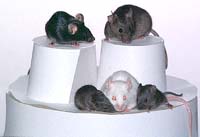
Cambridge MA (SPX) Jul 31, 2006 For the first time, scientists have been able to watch neurons within the brain of a living animal change in response to experience. Thanks to a new imaging system, researchers at MIT's Picower Institute for Learning and Memory have gotten an unprecedented look into how genes shape the brain in response to the environment. Their work is reported in the July 28 issue of Cell. "This work represents a technological breakthrough," said first author Kuan Hong Wang, a research scientist at the Picower Institute who will launch his own laboratory at the National Institute of Mental Health in the fall. "This is the first study that demonstrates the ability to directly visualize the molecular activity of individual neurons in the brain of live animals at a single-cell resolution, and to observe the changes in the activity in the same neurons in response to the changes of the environment on a daily basis for a week." This advance, coupled with other brain disease models, could "offer unparalleled advantages in understanding pathological processes in real time, leading to potential new drugs and treatments for a host of neurological diseases and mental disorders," said Nobel laureate Susumu Tonegawa, a co-author of the study. Tonegawa, director of the Picower Institute and the Picower Professor of Biology and Neuroscience at MIT, Wang and colleagues found that visual experience induces a protein that works as a molecular "filter" to enhance the overall selectivity of the brain's responses to visual stimuli. The protein, called "Arc," was previously detected in the hippocampus, where it is believed to help store lasting memories by strengthening synapses, the connections between neurons. The Picower Institute's unexpected finding was that Arc also blocks the activity of neurons with low orientation selectivity that are not well "tuned" to vertical and horizontal lines, while keeping neurons with high orientation selectivity. "Consequently, with the help of Arc, the overall orientation selectivity in the visual cortex is sharpened by visual experience," like a camera that learns to focus better over time, Wang said. What's more, he said, "we suspect that this molecular filtering mechanism may also be applicable to other information processing systems in the brain." Although baby animals are born with a handful of neurons tuned to respond to edges of light at specific orientations, the ability to detect these orientations improves with experience. The more the animal is exposed to shapes, objects and light, the better it can perceive them. Plasticity is the amazing ability of a neuron or a synapse to change in response to experience. Changes in synaptic strength require rapid protein synthesis, but at the molecular level, little is known about the factors contributing to experience-dependent changes in orientation selectivity in the visual cortex, Wang said. To come up with a better way to investigate this, the MIT team developed a state-of-the-art imaging system in which transparent cranial windows were implanted over the primary visual cortex, allowing the researchers to monitor over time the expression of proteins in the brains of live mice. The study exploited the power of two-photon microscopy (so-called because it uses two infrared photons to emit fluorescence in tissue), which allows imaging of living tissue up to 1 millimeter deep, enough for researchers to see proteins expressed within individual neurons within the brain. They then created a mouse model in which a coding portion of the Arc gene was replaced with a jellyfish gene encoding a green fluorescent protein (GFP). Neural activities that normally activate the Arc gene then activated the GFP, leaving a fluorescent trace detectable by two-photon microscopy. This allowed the researchers to image neuronal activation patterns induced by visual experience, thus uncovering the Arc protein's role in orchestrating neurons' reactions to natural sensory stimuli. The genetically engineered mice were let loose in an environment containing a cylinder covered with stripes of vertical or horizontal lines, and the proteins in their brains were monitored as the mice saw the cylinders daily. Community Email This Article Comment On This Article Related Links Massachusetts Institute of Technology Darwin Today At TerraDaily.com
 Scientists Discover Evolutionary Origin Of Fins, Limbs
 Gainesville FL (SPX) Jul 27, 2006
Performance on the dance floor may not always show it, but people are rarely born with two left feet. We have genes that instruct our arms and legs to grow in the right places and point in the right directions. They also provide for the spaces between our fingers and toes and every other formative detail of our limbs. |
|
|

| The content herein, unless otherwise known to be public domain, are Copyright 1995-2006 - SpaceDaily.AFP and UPI Wire Stories are copyright Agence France-Presse and United Press International. ESA PortalReports are copyright European Space Agency. All NASA sourced material is public domain. Additionalcopyrights may apply in whole or part to other bona fide parties. Advertising does not imply endorsement,agreement or approval of any opinions, statements or information provided by SpaceDaily on any Web page published or hosted by SpaceDaily. Privacy Statement |