
 |
 |
 |
 |
 |
 |
 |
 |
 |

 |
MESSENGER Completes Fifty Percent Of Cruise Phase
Laurel MD (SPX) Nov 26, 2007 On November 25, MESSENGER will have reached the halfway point in its 6.6-year cruise phase, as measured by travel time. In late January 2008 - shortly after its first flyby of Mercury - the probe's cruise speed (relative to the Sun) will reach its highest since launch: 62.5 kilometers per second (or 140,000 miles per hour). Highlights of the first three years, three months of the mission include a flyby of Earth one year after launch and two passes by Venus in October 2006 and June 2007. During the second half of its journey, MESSENGER and its team of scientists and engineers will be even busier. On January 14, 2008, MESSENGER will fly within 200 kilometers of the surface of Mercury and will be the first spacecraft to pass the planet since Mariner 10 flew by in 1974 and 1975. This first flyby promises to reveal new discoveries. MESSENGER's instruments will begin to make progress on the mission goals to:
- Map the elemental and mineralogical composition of Mercury's surface; This flyby event, along with two additional passes by Mercury and three deep space maneuvers, will slow the spacecraft sufficiently for Mercury orbit injection on March 18, 2011. "The halfway point for MESSENGER's cruise phase is more than a statistical milestone, because in less than two months we'll have our first close-up view of Mercury," offers MESSENGER Principal Investigator Sean Solomon. "From then until the end of the mission, we'll be peeling back Mercury's mysteries, many of which have perplexed the planetary science community for more than three decades." MESSENGER is about 68.5 million miles (110.3 million kilometers) from the Sun and 160.4 million miles (258.1 million kilometers) from Earth. At that distance, a signal from Earth reaches the spacecraft in 14 minutes and 21 seconds. The spacecraft is moving around the Sun at 61,161 miles (98,429 kilometers) per hour. Community Email This Article Comment On This Article Related Links MESSENGER Mission News Flash at Mercury Mars News and Information at MarsDaily.com Lunar Dreams and more
 Critical Deep-Space Maneuver Targets MESSENGER For Its First Mercury Encounter
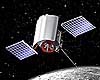 Laurel MD (SPX) Oct 19, 2007
The MESSENGER spacecraft delivered a critical deep-space maneuver on Wednesday - 155 million miles (250 million kilometers) from Earth - successfully firing its large bi-propellant engine to change the probe's trajectory and target it for its first flyby of Mercury on January 14, 2008. "Completing this maneuver was a huge milestone for the mission," offered MESSENGER Principal Investigator Sean Solomon. "We are now en route to the closest glimpse of Mercury that anyone has ever seen. Over the next three months the suspense about what we will find will steadily build." |
|
|

| The content herein, unless otherwise known to be public domain, are Copyright 1995-2007 - SpaceDaily.AFP and UPI Wire Stories are copyright Agence France-Presse and United Press International. ESA Portal Reports are copyright European Space Agency. All NASA sourced material is public domain. Additional copyrights may apply in whole or part to other bona fide parties. Advertising does not imply endorsement,agreement or approval of any opinions, statements or information provided by SpaceDaily on any Web page published or hosted by SpaceDaily. Privacy Statement |

