|
 |
 |
 |
 |
 |
 |
 |
 |

 |
Looking At The Impact Of Hurricane Ivan On Florida Coasts
Miami FL (SPX) Nov 28, 2006 Ivan was just one of four strong hurricanes to directly hit Florida coasts within a 1-month period in 2004. A new study has examined the poststorm impact and the short-term recovery from Ivan along a 200-km stretch of coast from Fort Walton Beach to St. George Island. The study is published in the latest issue of the Journal of Coastal Research. Hurricane Ivan made landfall along the northwestern Florida and Alabama coast on September 16, 2004. It briefly reached Category 5 strength, persisting as a strong Category 4 hurricane in the Gulf of Mexico before being downgraded to a strong Category 3 at landfall by the U.S. National Hurricane Center. A team of researchers from the University of South Florida conducted one prestorm and three poststorm beach-profile surveys to understand the morphological changes created by Ivan and also the poststorm recovery. Included in the assessment was an excavation of 46 trenches to study the characteristics and thickness of subaerial storm deposits. Storm impact along barrier island coasts has been the subject of numerous studies. Because of the largely unpredictable nature of extreme storms like hurricanes, most studies concentrate on poststorm impact and behavior, whereas collection of prestorm data is typically not conducted, making it difficult to quantify the dramatic morphological impact of storms as well as poststorm recovery. What the study found was apparent, and dramatic morphological and sedimentological impacts extended more than 300 km eastward from the center of the hurricane. Extensive inundation and overwash occurred within 100 km from the storm center at landfall. The highest elevation of beach erosion extended considerably above the measured storm-surge level, indicating that storm-wave setup and swash run-up played significant roles in controlling the elevation of beach erosion. Beach recovery began immediately after the storm. Within 90 days, the berm crest recovered to its prestorm elevation, although it was now located 15 m landward.
Journal of Coastal Research is the bi-monthly journal of The Coastal Education and Research Foundation (CERF). Community Email This Article Comment On This Article Related Links The Coastal Education and Research Foundation Weather News at TerraDaily.com A world of storm and tempest Bringing Order To A World Of Disasters When the Earth Quakes A world of storm and tempest
 NASA Launches Hurricane Data Portal For Scientists, Educators, And Application Users
 Greenbelt MD (SPX) Nov 28, 2006
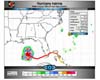
Scientists, college students, and applications users seeking satellite data on hurricanes now have a new place to turn -- a web portal created by NASA Goddard Earth Sciences Data and Information Services Center, Greenbelt, Md. The new web portal is designed for viewing and studying hurricanes with a variety of measurements from satellite-based NASA instruments. |
|
|

| The content herein, unless otherwise known to be public domain, are Copyright 1995-2006 - SpaceDaily.AFP and UPI Wire Stories are copyright Agence France-Presse and United Press International. ESA PortalReports are copyright European Space Agency. All NASA sourced material is public domain. Additionalcopyrights may apply in whole or part to other bona fide parties. Advertising does not imply endorsement,agreement or approval of any opinions, statements or information provided by SpaceDaily on any Web page published or hosted by SpaceDaily. Privacy Statement |