|
 |
 |
 |
 |
 |
 |
 |
 |

 |
Lonely Planets and Rare Earths
Moffett Field - Dec 02, 2003 Sprinkling humor through the text like a well-loved spice, "Lonely Planets" takes a lucid and balanced look at the possibility for extraterrestrial life. On the one hand, Grinspoon is a hard-nosed scientist, applying critical reasoning to analyze various aspects of astrobiology. Yet he also shows his affection for science fiction, and notes the huge influence it had on his own scientific imagination. Most impressively, he is open-minded enough to consider UFO-encounter stories, rather than reflexively dismissing them as most scientists do. He even attends meetings held by those who believe aliens are among us, and visits people and places to investigate the likelihood of such encounters. One of the major themes of "Lonely Planets" is that astrobiology is not a science so much as an exercise in natural philosophy, and has been since the days of Copernicus, Galileo, and Kepler. Modern scientists specialize, breaking phenomena down into smaller and smaller sub-studies. Astrobiology takes a broader view, bringing together many different fields of science. "By helping rejoin the splintered communities of science, and rubbing our noses in the limits of science, astrobiology can help us rediscover the study of nature as a whole," Grinspoon writes. Science uses numerous examples to prove a theory, whereas astrobiology must extrapolate from an example of one - one Earth, one solar system, one form of life. Despite astrobiology's newfound popularity with (and funding from) NASA, Grinspoon points out that it often straddles the line between science and pseudoscience. He states, "Astrobiology is intellectually unrestrained - some would even say flaky - compared to other fields When reading astrobiology papers, you have to set your bullshit detector on a slightly higher setting than you would when reading in an older, more established field." By calling astrobiology a philosophy, Grinspoon is not saying science is irrelevant. Rather, just as in philosophy, we need to question the basis of our theories and biases. Are the rules of chemistry and physics the same everywhere? What does life need in order to exist? How do matter and consciousness interact? Will aliens behave in ways we can predict? These are just a few of the questions addressed in "Lonely Planets." Astrobiology Magazine (AM): Why did you choose the name "Lonely Planets" for your book? Didn't you know the publishing rule that a book will sell more copies if you include the words "naked" or "blood" in the title? David Grinspoon (DG): You're right, so I've decided that my next book will be "The Physics of Princess Di," which should sell much better. Actually Frank Drake gently criticized the title "Lonely Planets," suggesting that it sounds too much like "Rare Earth." My answer is that many things are rare, but in order to be lonely you need to be sentient. And the plural in "planets" is important. It is meant to hint at a plurality of planets with sentience, many of which do not yet know they have company. Yet they all long for it, as we do. This quest is probably an innate feature of conscious life anywhere in the universe. I also wanted to convey something of the emotional, even spiritual, aspect of the scientific search for alien life. AM: How ironic that Frank Drake said your book title was similar to Peter Ward and Donald Brownlee's book, "Rare Earth," since the books have such opposing viewpoints. In "Rare Earth," the authors say that complex life needs Earth-like conditions to exist. A major theme of your own book is that life co-evolves with the biosphere, and once this cycle takes hold on any planet, complex life may be inevitable. DG: Earth wouldn't have "Earth-like" conditions without life, because life has shaped the world we know. For instance, photosynthetic organisms created the oxygenated atmosphere, as well as the ozone layer that protects us from the Sun's most destructive rays. So to say another planet must be Earth-like in order to support life is to put the cart before the horse. Instead, a planet must support life in order to be Earth-like. So the question is: Were there rare initial conditions on Earth that facilitated the origin of life? We don't know. But certainly Earth's unique evolution is largely a product of biological forces, or at least a co-production of the biological and geological. Life on Earth has made clever adaptations to make the best use of the planet's complex history. All planets with continuous geological activity for billions of years will have similarly complex histories, but they will all be different in the details. Complex species will be the result of lengthy evolutionary processes that are closely bound to the physical evolution of their home planets. When creatures on any world first become self-aware and study their own natural history with science, someone will write a book called "Rare _____." (Fill in the blank with your planet's name.) They will say "Look at the weird and unlikely history of our planet that allowed us to evolve. Only on a planet just like ours could complex life arise." And they will be wrong. AM: You say that because life and its biosphere are so intertwined, it may not be possible to have an individual definition for "life." DG: I suspect that life can only survive on a planet for billions of years if it has become deeply embedded in the geochemical, physical, and climatic cycles of that planet in a way that stabilizes the environment. If this is the case, life will not be found in isolated, discontinuous pockets on a mostly dead world, but will always, as on Earth, permeate its planet. I think of life not as something that happens on a planet, but as something that happens to a planet. Life is a quality that the planet takes on. And it might be something that sticks and lasts through huge environmental and physical changes, as it has on Earth. AM: You also state that humans may be the biosphere's way of gaining consciousness and self awareness, and that we are at the very beginning of this evolution. DG: We don't know how hard it is for a planet to evolve a biosphere, or to become a "living world," but once it gets to that state, I would bet that such biospheres survive for billions of years. So they would last for much of the lifetime of their planet's parent star, and occasionally longer. Stars have a limited life span. Stars like our sun, for instance, burn out after 10 billion years. After that, life on any habitable planets orbiting that star will go extinct. So if you want to outlive your star of birth, you will need to become complex and sentient and comfortable with space travel. Your biosphere must wake up and consciously choose survival, as Earth's is now attempting to do through the clumsy human experiment. David H. Grinspoon is a planetary scientist at the Southwest Research Institute in Boulder Colorado. His book Lonely Planets: The Natural Philosophy of Alien Life was published in November 2003. All rights reserved Community Email This Article Comment On This Article Related Links David H. Grinspoon SpaceDaily Search SpaceDaily Subscribe To SpaceDaily Express Life Beyond Earth Lands Beyond Beyond - extra solar planets - news and science
 Latching Onto Lichen
 Moffett Field CA (SPX) Dec 06, 2005
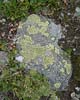
Bacteria can often survive the harsh conditions of space, and their toughness and adaptability have made them key candidates for the transfer of life between planets. But in a recent study by European scientists, lichen survived a trip in space even better than bacteria do. |
|
|

| The content herein, unless otherwise known to be public domain, are Copyright 1995-2006 - SpaceDaily.AFP and UPI Wire Stories are copyright Agence France-Presse and United Press International. ESA PortalReports are copyright European Space Agency. All NASA sourced material is public domain. Additionalcopyrights may apply in whole or part to other bona fide parties. Advertising does not imply endorsement,agreement or approval of any opinions, statements or information provided by SpaceDaily on any Web page published or hosted by SpaceDaily. Privacy Statement |