|
 |
 |
 |
 |
 |
 |
 |
 |

 |
Lockheed Martin Sea Talon Program Achieves Key Milestones
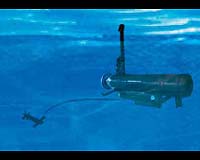
Riviera Beach FL (SPX) Aug 08, 2006 Lockheed Martin's Sea TALON (Tactical Littoral Ocean Network) system successfully completed several significant testing milestones in its development as an Anti-Submarine Warfare (ASW) mission module for the U.S. Navy's Littoral Combat Ship (LCS). Sea TALON is a unique undersea surveillance system that uses a Remote Towed Active Source (RTAS), a multi-band transducer networked with a Remote Towed Array (RTA), to provide search, detection and localization of quiet submarines in the littorals. Each array is towed by an unmanned, semi-autonomous, semi-submersible Remote Multi-Mission Vehicle (RMV), an ASW-variant of Lockheed Martin's AN/WLD-1 Remote Minehunting System. The RMV, launched and controlled remotely from a forward-deployed LCS, will provide the Navy's first unmanned, organic, real-time ASW capability, significantly enhancing ship and crew safety. Recent testing conducted offshore of Lockheed Martin's Riviera Beach, FL facility verified two important parameters for the Sea TALON program's capabilities to serve aboard the LCS. The tests demonstrated that the RTAS and RTA could achieve the necessary depth for the best acoustic performance and that the RMV's stability was not affected during the towing of the active source and passive receiver at various speeds and depths. "This marks another key milestone in the life of this essential program, which will provide an important new offboard ASW capability in the littoral battlespace at lower risk to ships and Sailors," said Captain Walt Wright, program manager at the U.S. Navy's LCS Mission Module Program Office (PMS-420) of the Program Executive Office for Littoral and Mine Warfare (PEO LMW). "Sea TALON successfully leverages several important Navy programs and technologies, including towed array development, use of common software baselines to achieve efficient use of computer programming resources, plus the unmanned vehicle and architecture from RMS. Its rapid development and maturity will enable successful delivery to the first LCS ASW Mission Package in 2008." "We are delighted with the results of our array testing at sea, as well as the rapid progress of the overall program," said Jim Weitzel, vice president of Lockheed Martin's business unit in Riviera Beach. "Our teammates from the Naval Surface Warfare Center in Panama City, FL; the Naval Undersea Warfare Center in Newport, RI; and the Space and Naval Warfare Systems Center in San Diego, CA have played a key role in the success of this program." Further in-water testing is scheduled for late 2006 at the Navy's test facility at Seneca Lake near Syracuse, NY. Final integration and test will be conducted in 2007 at Lockheed Martin's Riviera Beach, FL facility. Community Email This Article Comment On This Article Related Links Lockheed Martin UAV News - Suppliers and Technology
 FAA Authorizes Predators To Seek Survivors
 Langley AFB VA (AFNS) Aug 04, 2006
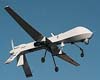
Traditionally tasked to hunt for targets, Air Combat Command's Predators are now authorized to seek survivors during disaster relief operations. A certificate of authorization allows the MQ-1 or MQ-9 to support relief operations by providing video and infrared search and rescue capability within specified flight restrictions. |
|
|

| The content herein, unless otherwise known to be public domain, are Copyright 1995-2006 - SpaceDaily.AFP and UPI Wire Stories are copyright Agence France-Presse and United Press International. ESA PortalReports are copyright European Space Agency. All NASA sourced material is public domain. Additionalcopyrights may apply in whole or part to other bona fide parties. Advertising does not imply endorsement,agreement or approval of any opinions, statements or information provided by SpaceDaily on any Web page published or hosted by SpaceDaily. Privacy Statement |