|
 |
 |
 |
 |
 |
 |
 |
 |

 |
Lockheed Martin Beats Boeing in Joint Strike Fighter Contest
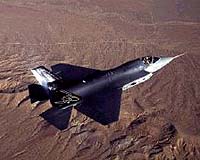
Newtown - Oct 26, 2001 As part of the most lucrative weapons competition ever, the Pentagon today selected Lockheed Martin Corporation over Boeing Company to build the Joint Strike Fighter (JSF), a next-generation aircraft that will replace host of US Air Force, Navy and Marine Corp fighter and attack aircraft. The JSF program is a huge prize for Lockheed Martin, with a potential total value of $200 billion-$400 billion. The US plans to buy nearly 3,000 aircraft, while the United Kingdom is expected to procure as many as 150. The US Air Force requires 1,763 aircraft; the US Navy, 480 aircraft; the US Marine Corps, 609 aircraft; the British Royal Navy, 60 aircraft; and the British Royal Air Force, 90 aircraft. Lockheed Martin was selected today for the initial 10-year engineering and manufacturing development (EMD) contract, valued at about $20 billion. During the EMD phase, the company will build a number of preproduction aircraft for test purposes. The initial preproduction aircraft is scheduled to fly in the first quarter of 2005, with delivery of production aircraft slated to begin in 2008. The JSF program is a US/UK effort to develop an affordable next-generation strike fighter aircraft. Three JSF versions are planned: a multirole, conventional takeoff and landing (CTOL) version to replace US Air Force F-16s and A-10s; a carrier-based attack aircraft to replace US Navy F-14s and A-6s; and a short takeoff and vertical landing (STOVL) aircraft to replace US Marine Corps AV-8B Harrier IIs and F/A-18A/C/Ds, British Royal Navy Sea Harriers, and British Royal Air Force Harrier GR7s. Export sales could result in the production of another 2,000 or so JSF aircraft. Several countries besides the US and the UK are already involved in the JSF program at various levels of participation, including Canada, Denmark, Israel, Italy, the Netherlands, Norway, Singapore, and Turkey. The Lockheed Martin JSF design is called the X-35, while the Boeing design was known as the X-32. The two designs were quite different in concept -- presenting the Pentagon with a real choice -- with the Lockheed Martin design overall the more conventional of the two. It is, in certain ways, similar to the company's F-22 fighter, which is being produced for the US Air Force. In contrast. the Boeing design was quite innovative. It featured a high level of commonality among the different JSF versions, thus holding out the potential of significant cost savings. Boeing also touted its planned use of lean manufacturing techniques as adding to the affordability of its JSF design. However, uncertainty surrounded the question of whether Boeing would be able to prove such cost savings to the Pentagon. During the months leading up to the JSF decision, Lockheed Martin repeatedly emphasized that its EMD design is very close to its X-35 prototypes. Boeing's EMD design differed much more from its X-32 prototypes, which may have led to some discomfiture regarding the Boeing bid among those involved in the JSF decision process. There may also have been a perception that the Lockheed Martin team, which includes both Northrop Grumman and BAE Systems, was more experienced than the team that Boeing put together. The Pentagon has insisted on a winner-take-all procurement strategy for the JSF program. Now that Lockheed Martin has been selected, what will happen to Boeing? The Chicago-based company is considerably diversified. Arguably, it will be less affected by the adverse JSF decision than Lockheed Martin would have been. In any event, Boeing will not be leaving the fighter business immediately. It will continue manufacturing F/A-18s and F-15s for several more years. As production of these earlier fighters ends, though, the company could find itself no longer a prime manufacture of fighter aircraft. However, possibly at the direction of Congress, Boeing might well become involved with the JSF program after all, whether as a second production source or (more likely) a principal subcontractor. Community Email This Article Comment On This Article Related Links Forecast International/DMS Inc Lockheed Martin Joint Striker Fighter SpaceDaily Search SpaceDaily Subscribe To SpaceDaily Express Military Space News at SpaceWar.com
 Space Group To Activate New Unit
 Colorado Springs CO (SPX) Jan 6, 2006
Air Force Reserve Command's 310th Space Group will travel deeper into the space program when it activates a new unit Jan. 7. Headquarters Reserve National Security Space Institute will be a Reserve associate unit to the National Security Space Institute in Colorado Springs, Colo. The institute is the Department of Defense's focal point for providing education about space power in joint warfighting. |
|
|

|
|
|
|
|
|
|
|
|
|
|
|
| The content herein, unless otherwise known to be public domain, are Copyright 1995-2006 - SpaceDaily.AFP and UPI Wire Stories are copyright Agence France-Presse and United Press International. ESA PortalReports are copyright European Space Agency. All NASA sourced material is public domain. Additionalcopyrights may apply in whole or part to other bona fide parties. Advertising does not imply endorsement,agreement or approval of any opinions, statements or information provided by SpaceDaily on any Web page published or hosted by SpaceDaily. Privacy Statement |