|
 |
 |
 |
 |
 |
 |
 |
 |

 |
Large-Scale Genomics Project Will Hunt Genes Behind Common Childhood Diseases
Philidelphia PA (SPX) Jun 09, 2006 Children's hospital goals: Use gene knowledge to guide therapy, devise new tests and treatments The Children's Hospital of Philadelphia is launching an ambitious program to identify the genes responsible for common childhood diseases. Making use of advanced automated technology from the biotechnology company Illumina, Inc., the Hospital's new Center for Applied Genomics will house one of the world's largest programs for genotyping--the process of detecting gene variations, with the aim of linking them to particular illnesses. The program will focus on some of the most prevalent diseases of childhood � asthma, obesity and diabetes, among others � as well as cancer, all of which are thought to involve the contributions of multiple, interacting genes. The Center's researchers will then work to translate the genetic knowledge into precisely targeted treatments for the diseases in question, customizing treatments to a child's genetic profile. "We are following a trail blazed by the Human Genome and HapMap Projects, but tailoring our approach to children," said Philip R. Johnson, M.D., chief scientific officer at The Children's Hospital of Philadelphia. "As one of the world's largest and most comprehensive pediatric networks, we have a sizable base of patients and families from which to collect data. This focused effort in genomics reaffirms that we are absolutely committed to finding cures for childhood diseases." The Human Genome Project compiled the sequence of DNA bases in all 23 chromosomes in the human genome, while the HapMap Project listed haplotypes � blocks of DNA sequences with variations thought to be linked to risks of specific diseases. Leading the new Center for Applied Genomics is Hakon Hakonarson, M.D., Ph.D., who has returned to Children's Hospital from deCODE Genetics, Inc., a Reykjavik-basedompany that has conducted pioneering genomic research on the entire population of Iceland. At deCODE, Dr. Hakonarson was intimately involved in many of the company's important genome-wide mapping and association studies over the past several years, and served as director of Respiratory, Inflammatory and Pharmacogenomics Research, vice president of Clinical Sciences, and later as vice president of Business Development. "Our goals for the Center are to generate new diagnostic tests for childhood diseases, to use this diagnostic knowledge to guide physicians to the most appropriate therapies. In addition, we plan to form strategic partnerships with biopharmaceutical companies to develop novel therapeutics," said Dr. Hakonarson. Tailoring treatments to a patient's genetic profile represents an era of personalized medicine still in its early stages. Part of the research task ahead, said Dr. Hakonarson, is not only to map gene variants to disease risk, but also to investigate how genes interact with environmental factors. "We will be tracing the major underlying genetic component of disease-related genes while discovering the biological pathways involved in disease development," Dr. Hakonarson added. "For instance, a specific cholesterol receptor may be dysregulated because of genetics, or the pathway may also be dysregulated because of an unhealthy diet. "If we can identify key bottlenecks for dysregulation, we may be able to treat not only the five percent of people with a particular gene variant for a disease, but also the larger percentage who suffer the disease without having that variant." To accomplish the large-scale genotyping analysis, the Center for Applied Genomics at Children's Hospital will use the BeadLab, a highly automated laboratory that will be able to process 264 patient samples per day and simultaneously analyze over 550,000 genetic variants for each sample. Developed by San Diego-based Illumina, the genotyping BeadLab will be installed and fully operational at Children's Hospital by the end of June. "Once the BeadLab is installed here, we will have one of the largest genotyping projects in the world," said Dr. Hakonarson. "The equipment will be capable of producing approximately 150 million genotypes per day, all extracted from blood samples. Children's Hospital will be the only pediatric hospital to have this technology entirely at its disposal." The Center plans to analyze blood samples from over 100,000 children over the next three years. Patients from the Children's Hospital network will be asked to contribute blood samples. For those who agree, a sophisticated information management system will track the samples and store medical records information in an encrypted form to preserve patient confidentiality. Clinicians will also ask the children's parents to contribute blood samples and divulge medical information, to strengthen the project's base of information. "Our sample size will be large enough to provide great statistical power to our research," added Dr. Hakonarson. "We will be able to characterize genotypes and health conditions over a sizable population of children. This project will help to set the standard for identifying biological links to childhood diseases." Community Email This Article Comment On This Article Related Links The Children's Hospital of Philadelphia Illumina Epidemics on Earth - Bird Flu, HIV/AIDS, Ebola
 H5N1 Signature May Help Detection
 Oxford, England (UPI) Jun 08, 2006
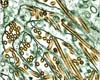
Biotechnology research and development company BioWarn LLC this week announced that its SmartSense biological substance detection system can instantly detect the presence of the H5N1 subtype of avian influenza. |
|
|

| The content herein, unless otherwise known to be public domain, are Copyright 1995-2006 - SpaceDaily.AFP and UPI Wire Stories are copyright Agence France-Presse and United Press International. ESA PortalReports are copyright European Space Agency. All NASA sourced material is public domain. Additionalcopyrights may apply in whole or part to other bona fide parties. Advertising does not imply endorsement,agreement or approval of any opinions, statements or information provided by SpaceDaily on any Web page published or hosted by SpaceDaily. Privacy Statement |