|
 |
 |
 |
 |
 |
 |
 |
 |

 |
LM Tests Air Force Loitering Attack Missile
Dallas TX (SPX) May 12, 2006 Lockheed Martin announced Wednesday it has conducted the fourth flight test of the U.S. military's Loitering Attack Missile. The LAM is designed to loiter, locate, identify and destroy high-value mobile targets at extended range. It is able to search large areas for moving or poorly located targets, then engage those targets. The missile also acts as a cruising artillery munition, intended for hunter-killer missions where automatic target recognition systems find and identify targets of interest. If the network is active, it can report the targets and be controlled by a man in the loop. Lockheed Martin conducted the flight test at Eglin Air Force Base, Fla. The prototype, which featured a square-body LAM airframe, included a turbojet demonstrated launch through transition to cruise. The test was abbreviated, however, because of what LM termed "fuel issues that were promptly identified, reported and addressed." One more flight test remains in the series to demonstrate LAM end-to-end performance, the company said in a statement. During the flight, the LAM launched vertically from a container launch unit. It maintained stability during the rocket-powered ascent phase using a fin-control actuation system, and it maintained stability during wing deployment, the statement said. The LAM started its micro-turbojet engine with an onboard electric generator, executed a high-G maneuver to its designated altitude, transitioned to cruise, established a commercial GPS fix, and maneuvered and navigated to the initial waypoint. An onboard subsystem - including a nose mounted color TV camera recording the missile view through a clear glass nose dome - provided real-time telemetry of all internal operations. Building on an earlier concept developed by the Defense Advanced Research Projects Agency's NetFires program, the square-body LAM airframe features more room for fuel, bigger wings and bigger fins for extended loiter time and improved control, a more fuel efficient turbojet and an Aerojet annular rocket motor. Lockheed Martin's Missiles and Fire Control division designed and integrated the LAM airframe, seeker, electronics, fuel system and software suite. Key subsystems of LAM include a miniature turbojet from Technical Directions of Ortonville, Mich., a motor that shares heritage with an air-launched predecessor; a control actuation system from Moog in Buffalo, N.Y. LM's famed Skunk Works in Palmdale, Calif., developed the control surfaces using advanced low-cost production technology. The remaining test in this five-flight series will involve a Guided Test Vehicle with a turbojet and LADAR seeker. The GTV will be a complete missile system flown against a real target in an end-to-end demonstration, from launch through search to target identification and attack. NetFires is a limited liability company formed by Lockheed Martin and Raytheon to develop the LAM's Non Line-Of-Sight launch system. Community Email This Article Comment On This Article Related Links LM Missiles And Fire Control Learn about missile defense at SpaceWar.com All about missiles at SpaceWar.com
 Boeing Wins Contract To Support Minuteman Flight Testing
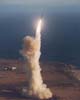 St. Louis MO (SPX) May 12, 2006
Boeing's Intercontinental Ballistic Missile Systems division announced Thursday it has received a $25.2 million U.S. Air Force contract to support flight testing of the Minuteman missile at Vandenberg Air Force Base, Calif. |
|
|

| The content herein, unless otherwise known to be public domain, are Copyright 1995-2006 - SpaceDaily.AFP and UPI Wire Stories are copyright Agence France-Presse and United Press International. ESA PortalReports are copyright European Space Agency. All NASA sourced material is public domain. Additionalcopyrights may apply in whole or part to other bona fide parties. Advertising does not imply endorsement,agreement or approval of any opinions, statements or information provided by SpaceDaily on any Web page published or hosted by SpaceDaily. Privacy Statement |