|
 |
 |
 |
 |
 |
 |
 |
 |

 |
Kiev Radar Row Set To Inflame Tensions Part Two
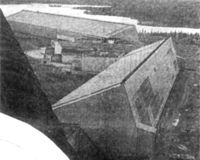
Moscow (UPI) Feb 6, 2008 Unlike the Russian radars deployed in Azerbaijan, Belarus and Kazakhstan, the Ukrainian systems are not manned by Russian officers. Both the qualifications of the radars' civilian Ukrainian personnel and the data they provide to Russia are questionable. The Sevastopol radar is the larger of the two problems because unlicensed radio stations of vessels fishing in the Black Sea use the same frequency. If not for information from the satellites monitoring the region, the data from Dnepr could be interpreted to indicate an incoming live missile. Russia's Space Forces have to recheck information from that radar, losing time and money, which is crucial for organizing a reply strike in a war. Russia will also stop using the Ukrainian radar because it now has a radar supplying the same type information, but better. Last year, the Voronezh-MD radar, which is cheaper to maintain, was put on test duty at the Lekhtusi village near St. Petersburg. The Ukrainian radars are manned by 80 specialists, while a crew of 15 is enough for the Voronezh. Moreover, the range of the Dnepr radar is 2,486 miles while the effective range of the Voronezh radar is 3,729 miles. When another Voronezh radar, under construction near Armavir in southern Russia, is put on combat duty, Russia will no longer need the Ukrainian radars. The Russian Foreign Ministry will most likely send the notification terminating the use of the Mukachevo and Sevastopol radars when the Armavir radar is put on test duty. Col. Gen. Vladimir Popovkin said Russia would eventually stop using the radars in Belarus -- the Volga radar in Gantsevichi, near Baranovichi -- Azerbaijan -- the Daryal radar in Gabala, near Mingechaur -- and Kazakhstan -- the Dnepr, Daryal-U and Dnestr radars near Lake Balkhash -- though not in 2008 or 2009. The Gabala radar has recently caused quite an uproar. First, its service life is nearly exhausted, and Russia pays Azerbaijan $7 million a year for leasing the station manned by Russian officers, whose families live in a nearby settlement. The Armavir radar will cover Gabala's zone of operation, and so Russia could stop using it. But the Kremlin has proposed that the U.S. Department of Defense use the Gabala radar to monitor air and missile launches in the Middle East, primarily from Iran, on the condition that Washington renounces its plans to deploy anti-ballistic missile elements in Eastern Europe. If the United States accepts the offer, the Gabala radar would be modernized and its service warranty prolonged. (Nikita Petrov is a Russian military analyst. This article is reprinted by permission of RIA Novosti. The opinions expressed in this article are the author's and do not necessarily represent those of RIA Novosti.) (United Press International's "Outside View" commentaries are written by outside contributors who specialize in a variety of important issues. The views expressed do not necessarily reflect those of United Press International. In the interests of creating an open forum, original submissions are invited.) Community Email This Article Comment On This Article Related Links Space Technology News - Applications and Research
 Kiev Radar Row Set To Inflame Tensions Part One
 Moscow (UPI) Feb 5, 2008
 The Federation Council, the upper house of Russia's Parliament, has approved the Jan. 25, 2008, decision of the State Duma, the lower house of Parliament, to denounce the agreement with Ukraine on the use of its early warning radars. |
|
|

| The content herein, unless otherwise known to be public domain, are Copyright 1995-2007 - SpaceDaily.AFP and UPI Wire Stories are copyright Agence France-Presse and United Press International. ESA Portal Reports are copyright European Space Agency. All NASA sourced material is public domain. Additional copyrights may apply in whole or part to other bona fide parties. Advertising does not imply endorsement,agreement or approval of any opinions, statements or information provided by SpaceDaily on any Web page published or hosted by SpaceDaily. Privacy Statement |