|
 |
 |
 |
 |
 |
 |
 |
 |

 |
Junk DNA May Not Be So Junky After All
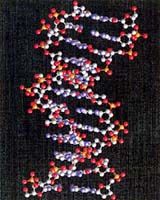
Baltimore MD (SPX) Mar 24, 2006 Researchers at the McKusick-Nathans Institute of Genetic Medicine at Johns Hopkins have invented a cost-effective and highly efficient way of analyzing what many have termed "junk" DNA and identified regions critical for controlling gene function. And they have found that these control regions from different species don't have to look alike to work alike. The study will be published online at Science Express March 23. The researchers developed a new system that uses zebrafish to test mammalian DNA and identify DNA sequences, known as enhancers, involved in turning on a gene. In studying RET, the major gene implicated in Hirschsprung disease and multiple endocrine neoplasia (MEN2), the team identified DNA sequences that can control RET but had not been identified using standard methods. Hirschsprung disease, also known as congenital megacolon, is a relatively common birth defect marked by bowel obstruction. MEN2 is an inherited predisposition to neuroendocrine cancers. The notion that mutations in enhancers play a role in human disease progression has been difficult to confirm because usually enhancers are located in the 98 percent of the human genome that does not code for protein, termed non-coding DNA. Unlike DNA sequences that code for protein, non-coding DNA, sometimes referred to as "junk" DNA, follows few rules for organization and sequence patterns and therefore is more difficult to study. "The difficulty with human genetic approaches to common disease is that we lack the power to precisely localize DNA sequences that are associated with disease, often leaving us immense stretches of DNA to look at," says one of the study's corresponding authors, Andy McCallion, Ph.D., an assistant professor in the McKusick-Nathans Institute. Most often one is limited to looking in the most obvious places, which may not yield the best results. "Until now," he says, "we've only been able to look under the lamplights for the car keys." Traditionally, DNA sequences are thought to have to look similar to function similarly; this is how scientists identify genes in other species, a strategy best used for studying similar species. From an evolutionary standpoint, the last common ancestor of human and zebrafish lived more than 300 million years ago. Because DNA sequences in each species have changed over time, traditional methods of comparing DNA sequences between humans and zebrafish have failed to identify any potential enhancers around the RET gene because the DNA sequences differ too much. That drove the Hopkins researchers to seek and develop this new system, by which virtually any DNA sequence can be tested for its ability to turn on a marker gene in zebrafish embryos. The system is a significant advance over current methods in this model species, allowing researchers to study more sequences in a shorter period of time. Using this, they identified several human enhancers able to control expression consistent with the zebrafish ret gene. Zebrafish have become the ideal system for doing these types of large scale studies. They are small - only about a half inch in length - they grow quickly, and are relatively inexpensive to maintain compared to mice or rats. "Zebrafish are the only vertebrate embryo you can even think about doing this type of work in," says Shannon Fisher, M.D., Ph.D., the study's first author and an assistant professor in cell biology in Johns Hopkins' Institute for Basic Biomedical Sciences. The researchers' next steps are further study of the RET enhancers they found to identify other mutations that might contribute to Hirschsprung disease and MEN2, and to entice other investigators to collectively build a database of human enhancers. "If there's one thing we've learned here, it's that we are not very good at recognizing enhancers. We just don't know what they look like," says Fisher. "We are anxious for others to use this technology on their favorite genes." Community Email This Article Comment On This Article Related Links Johns Hopkins - McKusick-Nathans Institute of Genetic Medicine Darwin Today At TerraDaily.com
 Zookeepers In Indias Kolkata Mourn Death Of 255-year-old Tortoise
 Kolkata, India (AFP) Mar 24, 2006
Zoo officials in Kolkata said Thursday a famed 255-year-old tortoise brought to the eastern Indian city during the rule of the British East India Company has died. |
|
|

| The content herein, unless otherwise known to be public domain, are Copyright 1995-2006 - SpaceDaily.AFP and UPI Wire Stories are copyright Agence France-Presse and United Press International. ESA PortalReports are copyright European Space Agency. All NASA sourced material is public domain. Additionalcopyrights may apply in whole or part to other bona fide parties. Advertising does not imply endorsement,agreement or approval of any opinions, statements or information provided by SpaceDaily on any Web page published or hosted by SpaceDaily. Privacy Statement |