|
 |
 |
 |
 |
 |
 |
 |
 |

 |
Japan's Nervous Neighbors
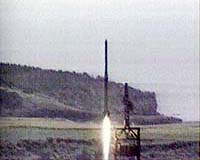
Washington DC (UPI) Dec 01, 2004 While the rest of the world has been worrying about Iran's nuclear plans and election fraud in Ukraine and the January elections in Iraq and Palestine, Asia is getting much more concerned about the prospect of Japan becoming once again a major military power. From Japan's viewpoint, the country has little choice after North Korea's highly provocative test of its Taepo-Dong ballistic missile in 1998, whose flight path took it over Japanese territory. Japan's sense that it lives in an increasingly dangerous neighborhood has been intensified by North Korea's nuclear weapons program, by China's ambitious re-armament drive and the growing tension over Taiwan. Last month, after a wide-ranging review of security policy, a Japanese government committee recommended a series of reforms, including easing the country's ban on arms sales and starting a national discussion on whether Japan should develop offensive missiles to accompany its U.S.-made missile defense systems. The panel also recommended a much more ambitious international policing and peacekeeping role for Japan's military. At the same time, the ruling Liberal Democratic Party is re-assessing Article 9 of the Constitution, which outlaws the use of force and says Japan must never again build offensive military forces. And while they are still known as the Self-Defense Force after the five decades of official pacifism that followed Japan's crushing defeat in 1945 and the atom bombs on Hiroshima and Nagasaki, the Japanese forces can now claim a bigger army and navy, and a bigger defense budget than Britain or France, usually reckoned to be the world's most serious military powers after the United States. The ultimate taboo began to lift two years ago, when senior government officials began openly to discuss the nuclear option. Shinzo Abe, a senior aide to Prime Minister Junichiro Koizumi, suggested that the constitution could be interpreted to mean that Japan could have nuclear weapons if they were small and defensive in nature. Senior Cabinet Secretary Yasuo Fukuda suggested that circumstances "could require Japan to possess nuclear weapons" in a private conversation with a group of reporters. Japan's neighbors, as measured by the reaction in the local media, are worried. Japan's abandonment of its peace constitution can only intensify the mistrust that the countries and peoples of Asia have towards Japan, and will certainly harm Japan's own interests in the end, commented China's Chengdu Shangbao. The Japanese government has stated it will play a role for world peace, but a country which denies its history of aggression, and a country where senior government officials have declared many times that they will carry out pre-emptive attacks on enemy countries, will only make its neighbors discontent and anxious. China's Fazhi Wanbao was even more direct, arguing: The increase in Japan's military strength will enhance the overall military power of the Japan-U.S. alliance and will have a disadvantageous influence on our country. China could encounter resistance from Japan over the Taiwan Strait and Spratly Islands issues. South Korea's press was also worried. An editorial in Chungang Ilbo said: It is highly likely that a change and expansion of the role of the Self-Defense Forces would aggravate the regional situation if the military situation in Northeast Asia turns bad. We watch Japan's moves to revise its constitution with unease. Official government reaction has been more muted, in part because of the on-again off-again Six-Nation talks with North Korea over its nuclear plans, and in part because Japan is apparently being nudged towards a regional role as a great power by its traditional ally, the United States. Indeed, U.S. Secretary of State Colin Powell raised the issue in the light of Japan's hopes to become a permanent member of the United Nations Security Council. If Japan is going to play a full role on the world stage and become a full active participating member of the Security Council, and have the kind of obligations that it would pick up as a member of the Security Council, Article Nine would have to be examined in that light, Powell said. He went on to stress: Whether or not Article Nine should be modified or changed is absolutely and entirely up to the Japanese people to decide. The crucial role of the U.S. ally was evident to South Korea's Chungang Ilbo newspaper, whose editorial says: Japan's changes almost make us dizzy. What is left for Japan is for it to fire guns in reality, which we will soon experience. A revision of the peace constitution, which is the last bulwark against it, is now a matter of time. Some people in South Korea see America not as a cork in the bottle, preventing Japan's militarization, but rather egging Japan towards militarization. It is clear that only the United States can control Japan. The Korean Times suggested that the stakes in the Asia-Pacific region were becoming very high indeed. Few could raise issue with Japan regaining the status of an ordinary country." But there are at least two preconditions. First, Tokyo should acknowledge the wartime atrocities committed against its neighbors and express genuine regret. Second, it should concern itself only with its own defense and not interfere in the affairs of others. But Japan's recent actions run squarely counter to this, the Koreas Times warned. If military conflict occurs between the two Koreas or between China and Taiwan, and the joint forces of the U.S. and Japan intervene, the results may be too appalling to imagine. Community Email This Article Comment On This Article Related Links SpaceDaily Search SpaceDaily Subscribe To SpaceDaily Express Military Space News at SpaceWar.com
 Space Group To Activate New Unit
 Colorado Springs CO (SPX) Jan 6, 2006
Air Force Reserve Command's 310th Space Group will travel deeper into the space program when it activates a new unit Jan. 7. Headquarters Reserve National Security Space Institute will be a Reserve associate unit to the National Security Space Institute in Colorado Springs, Colo. The institute is the Department of Defense's focal point for providing education about space power in joint warfighting. |
|
|

| The content herein, unless otherwise known to be public domain, are Copyright 1995-2006 - SpaceDaily.AFP and UPI Wire Stories are copyright Agence France-Presse and United Press International. ESA PortalReports are copyright European Space Agency. All NASA sourced material is public domain. Additionalcopyrights may apply in whole or part to other bona fide parties. Advertising does not imply endorsement,agreement or approval of any opinions, statements or information provided by SpaceDaily on any Web page published or hosted by SpaceDaily. Privacy Statement |