|
 |
 |
 |
 |
 |
 |
 |
 |

 |
Japan's Lower House Agrees To Let Defense Chief Order Missile Intercept
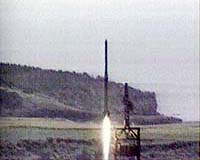
Tokyo (AFP) Jun 14, 2005 Japan's lower house agreed Tuesday to let the defense chief order the interception of a missile without prior cabinet permission, amid concern about the officially pacifist nation's response time in a crisis. The legislation, which was criticized by the opposition, must still be given the green light by the upper house, where its passage is nearly certain as Prime Minister Junichiro Koizumi's coalition also enjoys a majority. The bill was drafted amid worry that Japan would waste time in administrative procedures before reacting to an attack, as a missile fired from North Korea would reach the country in 10 minutes. North Korea provoked an international outcry in 1998 by firing a missile over Japan, in what the Stalinist state claimed was a satellite launch. On May 1, it launched a short-range missile into the Sea of Japan amid a standoff over its nuclear ambitions. The main opposition Democratic Party of Japan opposed the bill, saying that parliament needed to be notified before a missile intercept. The legislation passed with an amendment that the government would explain any intercept afterward to parliament. Japan is barred from using force or maintaining a military under its constitution imposed by the United States after World War II. Community Email This Article Comment On This Article Related Links SpaceDaily Search SpaceDaily Subscribe To SpaceDaily Express Learn about missile defense at SpaceWar.com Learn about nuclear weapons doctrine and defense at SpaceWar.com All about missiles at SpaceWar.com Learn about the Superpowers of the 21st Century at SpaceWar.com
 Missile Defense Program Moves Forward
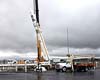 Washington DC (AFPS) Jan 12, 2006
The Missile Defense Agency continues to move forward in its efforts to protect the nation against a ballistic missile attack. The eighth ground-based interceptor missile was lowered into its underground silo at Fort Greely, Alaska, Dec. 18, 2005. |
|
|

| The content herein, unless otherwise known to be public domain, are Copyright 1995-2006 - SpaceDaily.AFP and UPI Wire Stories are copyright Agence France-Presse and United Press International. ESA PortalReports are copyright European Space Agency. All NASA sourced material is public domain. Additionalcopyrights may apply in whole or part to other bona fide parties. Advertising does not imply endorsement,agreement or approval of any opinions, statements or information provided by SpaceDaily on any Web page published or hosted by SpaceDaily. Privacy Statement |