|
 |
 |
 |
 |
 |
 |
 |
 |

 |
Japan Hopes To Expand Commuter Distance
Tokyo - April 14, 2000 - A revolutionary jet engine was unveiled at a Tokyo aerospace show last week. Designed to power a new generation of commercial aircraft that will fly at five times the speed of sound, the Hypersonic Transport Propulsion System (HYPR) is the brainchild of Japan's New Energy and Industrial Technology Development Organization (NEDO), a branch of the Ministry of International Trade and Industry. The heavy industry divisions of Kawasaki, Mitsubishi and Ishikawajima-Harima have teamed up to develop the engine, which is made up of two types of jet engine mounted end to end: a turbojet in front and a ramjet at the back (click on thumbnail graphic below). At speeds under Mach 3, an aircraft--as yet undesigned--would be propelled by the turbojet. To provide the extra thrust needed for higher speeds, the ramjet would kick in and gradually take over. An ingenious network of ducts and valves handles the transition from turbojet to ramjet mode. In a turbojet engine, a turbine-driven fan draws in air, compresses it, and pushes it through into a combustion chamber where fuel is injected and ignited to produce a hot high-speed exhaust that creates thrust. A ramjet, however, has no moving parts: the forward movement of the aircraft is enough to force air into the chamber where fuel is ignited, producing the exhaust that creates the thrust. Getting the two engines to work in tandem and designing materials to cope with high engine temperatures were the main difficulties confronting the design engineers. During tests, temperatures in the HYPR engine reached 1700 �C when simulating flight at Mach 3. Engines in subsonic planes don't get any hotter than 1500 �C. When flying at its intended speed of Mach 5, the engine will have to cope with temperatures of 1900 �C. The HYPR project began ten years ago as part of a long-term effort to build a commercial passenger jet capable of flying from Tokyo to New York in just three hours, at an altitude of 20 000 metres. "We don't know when that plane will be built," confesses Mitsubishi Heavy Industries engineer Akihiro Tobita. "It will take a lot of international cooperation." Foreign companies, including Rolls-Royce from Britain and General Electric and United Technologies from the US, are already providing technical expertise for the HYPR project. A spokesperson for Rolls-Royce confirms that it is taking part in research for the programme, alongside United Technologies and the French engine maker Snecma. NEDO says that the HYPR engine could be quieter and less polluting than conventional jet engines. Its next goal is to further reduce noise and pollution in the engine and increase its energy efficiency, as well as doing the groundwork for the body of the plane itself. This article appeared in the April 15 issue of New Scientist New Scientist. Copyright 1999 - All rights reserved. The material on this page is provided by New Scientist and may not be published, broadcast, rewritten or redistributed without written authorization from New Scientist. CommunityEmail This Article Comment On This Article Related Links Space
 Satellite Launch To Boost DTH In India
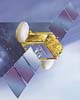 Calcutta, India (SPX) Dec 28, 2005
The successful launch Thursday of India's heaviest satellite from spaceport of Kourou in French Guyana may have boosted the country's space research efforts to yet another level, but it has also lifted the spirits of at least three Direct-To-Home televisions broadcasters, one of which has been waiting for years to launch its services in India. |
|
|

|
|
|
|
|
|
|
|
|
|
|
|
| The content herein, unless otherwise known to be public domain, are Copyright 1995-2006 - SpaceDaily.AFP and UPI Wire Stories are copyright Agence France-Presse and United Press International. ESA PortalReports are copyright European Space Agency. All NASA sourced material is public domain. Additionalcopyrights may apply in whole or part to other bona fide parties. Advertising does not imply endorsement,agreement or approval of any opinions, statements or information provided by SpaceDaily on any Web page published or hosted by SpaceDaily. Privacy Statement |