|
 |
 |
 |
 |
 |
 |
 |
 |

 |
Israeli Nukes Complicate International Nuclear Doctrine
Houston, Texas (AFP) Jun 27, 2006 The United States cannot denounce Iran's nuclear program while accepting Israel's possession of nuclear bombs, the head of the Arab League said Tuesday. "This will ultimately bring the Middle East to further instability and there will be an inevitable arms race," Arab League secretary general Amr Moussa told the US Arab Economic Forum in Houston, Texas. The United States is locked in a standoff with Iran over its uranium enrichment program. Washington and its allies suspect the program masks a nuclear bomb-making effort. The US administration turns a diplomatic blind eye to widely held suspicions -- including by the International Atomic Energy Agency -- that Israel already has a nuclear weapon. "We do not believe there is a good and bad nuclear program," said Moussa. "There is no moral and legal ground to distinguish them. Both are bad and all military nuclear programs or programs of weapons of mass destruction should not be allowed." Moussa reiterated Iran's right to operate peaceful nuclear programs under the terms of the Nuclear Non Proliferation Treaty and said the Arab-Israeli conflict is the greatest threat to instability in the Middle East. "This conflict is the one that will make or break stability in the region," he said. "There is no doubt that this conflict cannot be resolved without the active involvement of the United States as an honest broker." Moussa said the United States needed to acknowledge that the conflict was not a result of "terrorists" but of a military occupation by Israel. The policy of aiming for "security now and peace later" will not work, he said. "Only the role of honest broker played by the US will save the situation, will clear and change the reputation of US policy and lessen to a large extent the frustration." The Arab League chief said the conflict in Iraq was also a source of instability that could only be resolved through a reconciliation program to unite the varying factions. "Iraq should not be the theatre for settling accounts. Reconciliaition is necessary for rebuilding the new Iraq." Moussa also hailed recent progress in events in Somalia and Sudan and hoped that a recent peace agreement would bring peace to Darfur. He characterized the current global political situation as a "clash of civilizations" between Islam and the west. "The clash is being fed and abetted by extremists on both sides," he said in his speech.
Source: Agence France-Presse Community Email This Article Comment On This Article Related Links Learn about nuclear weapons doctrine and defense at SpaceWar.com Learn about nuclear weapons doctrine and defense at SpaceWar.com Learn about missile defense at SpaceWar.com All about missiles at SpaceWar.com Learn about the Superpowers of the 21st Century at SpaceWar.com
 Russia Will Not Join Ultimatums Over Nuclear Issue
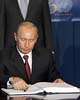 Moscow (AFP) Jun 27, 2006
Russia will not join any ultimatums over the problem of nuclear proliferation, President Vladimir Putin said Tuesday in a thinly veiled reference to US-led pressure on Iran. "We do not intend to join any sort of ultimatum, which only pushes the situation into a dead end, striking a blow against the authority of the UN Security Council," Putin told Russian diplomats in Moscow in the presence of journalists. |
|
|

| The content herein, unless otherwise known to be public domain, are Copyright 1995-2006 - SpaceDaily.AFP and UPI Wire Stories are copyright Agence France-Presse and United Press International. ESA PortalReports are copyright European Space Agency. All NASA sourced material is public domain. Additionalcopyrights may apply in whole or part to other bona fide parties. Advertising does not imply endorsement,agreement or approval of any opinions, statements or information provided by SpaceDaily on any Web page published or hosted by SpaceDaily. Privacy Statement |