|
 |
 |
 |
 |
 |
 |
 |
 |

 |
Is Russia Strong Or Weak
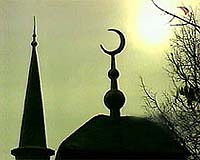
Washington (UPI) Jul 10, 2006 "Russia is never as strong as she looks; Russia is never as weak as she looks." This quotation, or ones similar to it, have been attributed to Talleyrand, Metternich, and Churchill. In May 2002, Putin pronounced a modified version of it (which he attributed to Churchill): "Russia was never so strong as it wants to be and never so weak as it is thought to be." What is of interest here, though, is neither the exact quote nor even who said it, but the enduring truth of the notion that Russia is neither as strong nor as weak as it seems. This is the result of Russia being composed of both strengths and weaknesses in the past, the present, and probably well into the future. Russia's strengths and weaknesses have varied somewhat over time. What concerns us most in attempting to assess Russian power now, of course, is what these are at present. Here is how I see them: Russia has a sizeable population. This, however, is not just aging, but shrinking -- thus making it difficult to maintain a large military establishment vis-�-vis all the security challenges Moscow faces. Russia is a very large country, but it is sparsely populated in Siberia -- thus making it potentially vulnerable to its highly populous neighbor, China. Over 10 percent of Russia's population is Muslim. While most Russian Muslims are Russified, some -- both in Chechnya and elsewhere -- have become attracted to Islamic radicalism. Russian prejudice against Muslims exacerbates this problem. Russia is extremely rich in petroleum and other natural resources, but has a poorly developed economy otherwise -- thus potentially making it more difficult for Russia to defend its resource endowment against outsiders (especially those undertaking rapid military modernization). Russia has a sizeable military, but its inability to end even an internal rebellion in tiny Chechnya casts grave doubt on Moscow's ability to project force anywhere beyond its borders. (Russia, of course, maintains a sizeable nuclear arsenal, but the devastating retaliation it would receive make it unlikely that Moscow will launch a nuclear attack against any other state possessing nuclear weapons, or against any other state closely allied to one that does). Russia under Putin has an increasingly authoritarian regime, yet Russian society is far more interconnected with the outside world than it was during the Soviet era -- thus potentially (though not necessarily) making the democratic, prosperous West an attractive model for important elements in Russian society. According to an article published in the Russian newspaper Nezavisimaya gazeta in June 2005, "... the Internet, which according to figures from the Public Opinion Foundation, is used by 18 million Russian citizens, is becoming not only an alternative source of information for the public, but also a center of growing opposition activity." Russia's many strengths have persuaded Putin and the Russian public generally that their country is still a great power. They tend to focus less on Russia's many weaknesses which limit its ability to act as one. The result is that Moscow sometimes overestimates its own strength. Thus when it tries to exert its influence abroad, it sometimes fails, resulting in Russia looking weak both abroad and at home. Russia is clearly not, as Putin said, "so strong as it wants to be." Russia obviously has the potential to become stronger than it is now. Moscow, though, can do little about some of Russia's weaknesses such as its aging, shrinking population overall and in Siberia in particular. But changes in Russian government policies could ameliorate weaknesses such as the growing alienation of its large Muslim minority, the stagnation of its non-petroleum economic sector, and the many problems plaguing its unreformed military. The most effective change Moscow could undertake to strengthen Russia would be democratization and the establishment of the rule of law. This would go a long way toward unleashing the talent and creativity of the Russian people that would allow for the growth of the non-petroleum economy that would in turn allow Moscow to modernize its military. These are steps, however, that the Putin administration has not been willing to undertake. It should be no surprise, then, that Russia is not "so strong as it wants to be." (Mark N. Katz is a professor of government and politics at George Mason University.)
Source: United Press International Community Email This Article Comment On This Article Related Links Learn about the Superpowers of teh 21st Centuryat SpaceWar.com Learn about the Superpowers of the 21st Century at SpaceWar.com Learn about nuclear weapons doctrine and defense at SpaceWar.com
 The Costs Of America's War Escalating
 Moscow (UPI) Jun 30, 2006
The Bush administration allocated huge sums towards military programs, though the money was spent not on the planned acquisition of arms, but on the wars in Iraq and Afghanistan and on other similar operations. This means that the U.S. Department of Defense's budget remained the same in fixed prices as under President Ronald Reagan, but spending on acquisitions has been cut to a third. |
|
|

| The content herein, unless otherwise known to be public domain, are Copyright 1995-2006 - SpaceDaily.AFP and UPI Wire Stories are copyright Agence France-Presse and United Press International. ESA PortalReports are copyright European Space Agency. All NASA sourced material is public domain. Additionalcopyrights may apply in whole or part to other bona fide parties. Advertising does not imply endorsement,agreement or approval of any opinions, statements or information provided by SpaceDaily on any Web page published or hosted by SpaceDaily. Privacy Statement |