|
 |
 |
 |
 |
 |
 |
 |
 |

 |
Iran Says Space Program Poses No Threat To Peace
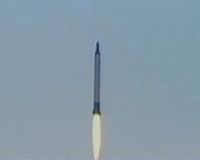
Tehran (RIA Novosti) Feb 06, 2008 A spokesman for Iran's government gave assurances on Tuesday that the country's achievements in space technology and research pose no threat to peace and stability in the world. Gholam-Hossein Elham's comments come a day after Tehran's successful launch of the Explorer-1 research rocket, which is reportedly capable of carrying a satellite into orbit, and the unveiling of the country's first domestically built satellite, named Omid, or Hope. "The launch of the Explorer rocket into space was conducted strictly for scientific purposes," the spokesman told a news conference in Tehran. "Our achievements in space research, as well as our progress in nuclear research, serve peace and justice." Iran is currently involved in a long-running dispute with the West over its controversial uranium enrichment program, with two sets of UN sanctions against Tehran in effect. The U.S. and its allies fear that both programs may serve as a cover for the development of nuclear weapons and long-range ballistic missiles. The White House issued a statement on Monday calling the Iranian launch an "unfortunate" development. "It's unfortunate Iran continues to test ballistic missiles. This regime continues to take steps that only further isolate it and the Iranian people from the international community," White House spokesman Gordon Johndroe said. In an apparent response to the U.S. comments, the Iranian official blasted the West for its hypocrisy in its treatment of Iran. "Those who express concerns over our achievements possess weapons of mass destruction themselves, and they continue to think of how to improve these weapons," Elham said. Iran says it needs satellite and carrier rocket technology to send more satellites in space and to enhance its telecommunications and disaster-prevention capability. Iran's official news agency IRNA said the Omid advanced research satellite was designed to operate in a low earth orbit and provide a variety of scientific data. It may be launched by March 2009. The first Iranian satellite, Sinah-1, was built by Russia and launched on October 28, 2005 on a Kosmos-3 booster rocket from North Russia's Plesetsk Space Center. But Iran aims to become a satellite-launching nation and have at least four satellites in orbit by 2010.
Source: RIA Novosti Community Email This Article Comment On This Article Related Links Military Space News at SpaceWar.com
 Iran Brushes Off White House Rebuke Following Rocket Launch
 Washington (AFP) Feb 4, 2008
The White House on Monday branded Iran's firing a rocket into space "unfortunate" and warned that the move would further isolate the Islamic republic from the international community. |
|
|

| The content herein, unless otherwise known to be public domain, are Copyright 1995-2007 - SpaceDaily.AFP and UPI Wire Stories are copyright Agence France-Presse and United Press International. ESA Portal Reports are copyright European Space Agency. All NASA sourced material is public domain. Additional copyrights may apply in whole or part to other bona fide parties. Advertising does not imply endorsement,agreement or approval of any opinions, statements or information provided by SpaceDaily on any Web page published or hosted by SpaceDaily. Privacy Statement |