
 |
 |
 |
 |
 |
 |
 |
 |
 |

 |
International Spotlight On Tiny Worms
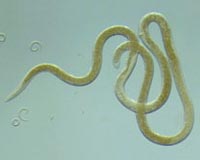
Brisbane, Australia (SPX) Jul 18, 2008 Nematodes, their importance and management, will bring 350 scientists from 36 countries together at the 5th International Congress of Nematology (ICN) in Brisbane. "Nematode plant pests cost about 10 per cent of world food production so research on these tiny worms is vitally important to humans," says Dr Mike Hodda from CSIRO Entomology and the Convenor of the 5ICN Organising Committee and President of the Australasian Association of Nematologists. "Although small, nematodes affect humans in many ways and topics at the conference will reflect this," he says. "Some can have devastating effects on the health of humans, their animals and their plants, but others benefit agriculture through enhancing nutrient cycling in soil." In these times of world food shortages, better ways of managing nematode plant pests are urgently needed as nematodes are evolving resistance to many of the commonly used chemicals. Nematodes - commonly called roundworms - are mostly tiny, though a few reach nearly 10 m long. Being small, they are hidden but they can cause enormous damage. They can also easily evade quarantine, so introduction of pest species is a real issue. Dr Sue Hockland from the Central Science Laboratory, York, UK will talk on emergencies in international trade, biosecurity and quarantine from potentially invasive nematode pests. Several of these have arrived in Australia's neighbours recently and threaten our agriculture and forests. "We will also hear how nematodes can thwart soil conservation projects and kill forests," Dr Hodda says. On a positive note, Dr Stephen Trowell from the Food Futures National Research Flagship will compare the sense of smell of the nematode Caenorhabditis elegans with those of more complex creatures. This nematode, the first animal to have its genome fully sequenced, is being used to advance biomedical knowledge in many fields, from cancer to aging. Other talks will focus on the control of pest insects using commercially-produced nematode parasites. Nematodes are found everywhere from the poles to the tropics, from the deepest ocean floors to the highest peaks and in and on other animals. If everything else on earth disappeared, then it would all still be visible, outlined by the billions of nematodes that occur in every possible niche. The ICN is held every six years under the auspices of the International Federation of Nematology Societies. The 2008 event is hosted by the Australasian Association of Nematologists. Community Email This Article Comment On This Article Share This Article With Planet Earth
Related Links Darwin Today At TerraDaily.com
 The Exotic Side Of Veterinary Science
 Nottingham, UK (SPX) Jul 17, 2008
The last 10 years has seen a huge increase in the popularity of exotic pets. Among the weird and wonderful animals being kept in our homes are monkeys, tarantulas, iguanas, salamanders, snakes, even hedgehogs. |
|
|

| The content herein, unless otherwise known to be public domain, are Copyright 1995-2007 - SpaceDaily.AFP and UPI Wire Stories are copyright Agence France-Presse and United Press International. ESA Portal Reports are copyright European Space Agency. All NASA sourced material is public domain. Additional copyrights may apply in whole or part to other bona fide parties. Advertising does not imply endorsement,agreement or approval of any opinions, statements or information provided by SpaceDaily on any Web page published or hosted by SpaceDaily. Privacy Statement |
 del.icio.us
 Digg
Digg Reddit
 YahooMyWeb
 Google
 Facebook