
 |
 |
 |
 |
 |
 |
 |
 |
 |

 |
Intermediate eXperimental Vehicle
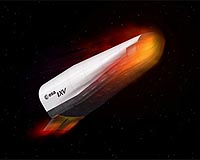
Paris, France (SPX) Oct 10, 2008 In 2012, Vega will carry ESA's Intermediate eXperimental Vehicle into space. The vehicle will then return to Earth to test a range of enabling systems and technologies for atmospheric re-entry. A new video with computer generated animations of the vehicle and its mission is now available. Part of ESA's Future Launchers Preparatory Programme has been devoted to optimising a long-term European roadmap for in-flight experimentation with atmospheric re-entry enabling systems and technologies. The Intermediate eXperimental Vehicle (IXV) project is the next core step of this effort. The IXV project objectives are the design, development, manufacturing, and on-ground and in-flight verification of an autonomous European lifting and aerodynamically controlled re-entry system. Among the critical technologies of interest, special attention is being paid to: + advanced instrumentation for aerodynamics and aerothermodynamics + thermal protection and hot-structures solutions + guidance, navigation and flight control through a combination of jets and aerodynamic flaps The project is particularly focussed on technology integration at the system level for in-flight verification. As indicated by its name, the IXV is designed to be the 'intermediate' element of a technology-effective and cost-efficient European programme for in-flight verification of technologies necessary for future operational systems. The IXV design activities are well under way, with the system preliminary design review planned for November 2008, which will allow the start of the full development (Phase-C/D) by the beginning of January 2009. IXV will be launched in 2012 from Europe's spaceport at Kourou, French Guiana, using the new Vega small launch vehicle. After re-entering the Earth's atmosphere and being slowed down by air drag, IXV will descend by parachute and land in the Pacific Ocean to await recovery and post-flight analysis. Community Email This Article Comment On This Article Share This Article With Planet Earth
Related Links Re-entry Technologies Space Tourism, Space Transport and Space Exploration News
 Apollo Heat Shield Uncrated After 35 Years, Helps New Crew Vehicle Design
 Greenbelt MD (SPX) Oct 09, 2008
NASA scientists developing the next generation of exploration vehicles and heat shields for NASA's Orion Crew Exploration Vehicle experienced "Christmas in July" when they uncrated the heat shields used on the Apollo missions some 35 years ago. These shields now are being analyzed to help with the development and engineering process. |
|
|

| The content herein, unless otherwise known to be public domain, are Copyright 1995-2007 - SpaceDaily.AFP and UPI Wire Stories are copyright Agence France-Presse and United Press International. ESA Portal Reports are copyright European Space Agency. All NASA sourced material is public domain. Additional copyrights may apply in whole or part to other bona fide parties. Advertising does not imply endorsement,agreement or approval of any opinions, statements or information provided by SpaceDaily on any Web page published or hosted by SpaceDaily. Privacy Statement |
 del.icio.us
 Digg
Digg Reddit
 YahooMyWeb
 Google
 Facebook