|
 |
 |
 |
 |
 |
 |
 |
 |

 |
Integral Systems Awarded Contract For Taiwan's NSPO Ground Segment
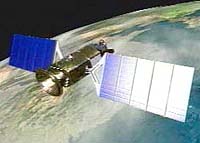
Lanham MD (SPX) Jan 08, 2007 Integral Systems has announced that it has been awarded a sole-source contract to upgrade Taiwan's NSPO's (National Space Organization's) existing mission operations system to simultaneously operate the NSPO's new Argo satellite and the existing FORMOSAT-2 and FORMOSAT-3/COSMIC spacecraft. Integral Systems also will support the NSPO in training operations and maintenance personnel, as well as support integration, testing, and simulation activities related to the launch and early orbit operations of the Argo mission. "We're proud to have been involved in NSPO's space program since its inception with ROCSAT-1 (FORMOSAT-1)," said Stuart Daughtridge, Executive Vice President of the Commercial Division at Integral Systems. "The sole-source award is a nice vote of confidence from the NSPO in our products and our services. We look forward to the NSPO continuing to be the Asian showcase for our LEO constellation control capabilities." The contract calls for Integral Systems to provide all of the software required to fly Argo and FORMOSAT-2 and -3, including commanding, telemetry processing, orbit analysis, scheduling, and tracking station automation, using one single command and control system. The core software is based on Integral Systems' EPOCH IPS (Integrated Product Suite) with some customized add-ons. Taiwan's NSPO originated in October 1991 as the National Space Program Office, intended to carry out Taiwan's first-stage plan of a 15-year "Space Technology Long-Term Developmental Program" approved by its Executive Yuen. NSPO acts as an execution organization for Taiwan's space program and integration capability for large, high-tech systems. The NSPO's purpose is to develop Taiwan's space technology development infrastructure, as well as competitive resources that would benefit Taiwan's space application industries for future international space markets. The "Second Phase Space Technology Long-Term Developmental Program" was approved by the committee of Taiwan's National Science Council in December 2002. The entire plan is scheduled for 15 years: from 2004 to 2018. The second phase space program will continue the performance of the first phase space program. The execution strategy will focus on meeting Taiwan's national needs, carrying out satellite programs, promoting academic research and industrial development, improving Taiwan's overall space technology development capacity, and adding value to the domestic industry. Community Email This Article Comment On This Article Related Links NSPO Integral Systems The latest information about the Commercial Satellite Industry Space Technology News - Applications and Research
 New Molecules Fastest Ever For Optical Technologies
 Washington WA (SPX) Jan 05, 2007
The internet could soon shift into overdrive thanks to a new generation of optical molecules developed and tested by a team of researchers from Washington State University, the University of Leuven in Belgium and the Chinese Academy of Science in China. |
|
|

| The content herein, unless otherwise known to be public domain, are Copyright 1995-2006 - SpaceDaily.AFP and UPI Wire Stories are copyright Agence France-Presse and United Press International. ESA PortalReports are copyright European Space Agency. All NASA sourced material is public domain. Additionalcopyrights may apply in whole or part to other bona fide parties. Advertising does not imply endorsement,agreement or approval of any opinions, statements or information provided by SpaceDaily on any Web page published or hosted by SpaceDaily. Privacy Statement |