|
 |
 |
 |
 |
 |
 |
 |
 |

 |
Innovative Take-Off System Could Lead To Safer, Cleaner Air Travel
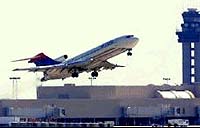
London, UK (SPX) Dec 07, 2004 A new approach to aircraft scheduling that uses computer models could allow a safe increase in airport throughput and reduce pollution. The system under development would, for the first time, provide runway controllers with advice, based on state-of-the-art computer models, on the most efficient, safe sequence in which aircraft can take-off. Currently, runway controllers carry out their demanding job using their own observations and mental calculations, with limited reliance on technical aids. The system is being designed to take factors such as aircraft size, speed and route into account. Large aircraft create more turbulence, for example, and so the aim is to group aircraft together by weight category. The system would also cover aircraft taxi-ing to the airport holding point, as well as those already waiting there. Responding quickly to changing circumstances, it would provide runway controllers with instant advice. By minimising the amount of time aircraft spend on the ground with engines running, the system would also reduce noise and fuel pollution affecting people living close to airports, and could save thousands of litres of aviation fuel. The research could lead to a computer-based system that helps runway controllers make quick but effective scheduling decisions, generating a 10-25% reduction in delays affecting aircraft waiting for clearance to take-off. The work is being carried out by computer scientists at the University of Nottingham with funding from the Engineering and Physical Sciences Research Council (EPSRC) and National Air Traffic Services (NATS). The research project is being run in conjunction with Heathrow Airport Air Traffic Control and will be designed to deal with 'real world' constraints (e.g. runway controller workloads and holding point structure). Professor Edmund Burke of the University's School of Computer Science and Information Technology says: "Reducing airport bottlenecks is good for passengers, airlines, the environment and people living close to airports. Our aim is to cut runway controllers' workloads while increasing safety as demand for air travel grows." Community Email This Article Comment On This Article Related Links EPSRC NATS SpaceDaily Search SpaceDaily Subscribe To SpaceDaily Express Space Tourism, Space Transport and Space Exploration News
 NASA Refines Design For Crew Exploration Vehicle
 Washington DC (SPX) Jan 12, 2006
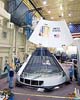
NASA's Constellation Program is making progress toward selecting a prime contractor to design, develop and build the Crew Exploration Vehicle (CEV), America's first new human spacecraft in 30 years. |
|
|

| The content herein, unless otherwise known to be public domain, are Copyright 1995-2006 - SpaceDaily.AFP and UPI Wire Stories are copyright Agence France-Presse and United Press International. ESA PortalReports are copyright European Space Agency. All NASA sourced material is public domain. Additionalcopyrights may apply in whole or part to other bona fide parties. Advertising does not imply endorsement,agreement or approval of any opinions, statements or information provided by SpaceDaily on any Web page published or hosted by SpaceDaily. Privacy Statement |