|
 |
 |
 |
 |
 |
 |
 |
 |

 |
Inmarsat-4 To Enhance Communication Across Indian Ocean From May 28
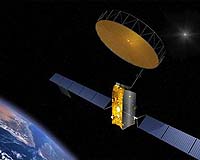
London, UK (SPX) May 23, 2005 Maritime customers will benefit from enhanced coverage across the Indian Ocean Region from May 28 when the new Inmarsat-4 (I-4) satellite is currently scheduled to enter commercial service. The time for the hand-over from I-3 to the new generation I-4 satellite has been set for 20:00 hours UTC on May 28, subject to confirmation nearer the day. Existing users of maritime spot-beam services will benefit immediately from enhanced coverage right across the Indian Ocean Region (IOR) once transition is complete. The switch-on and handover of traffic to the I-4 is expected to be seamless. For the first time, subscribers to services such as Fleet F77 128kbit/s, Fleet F55 and F33, and maritime mini-M, will be able to use their equipment to the full in areas where previously Inmarsat-3 spot-beam coverage was incomplete. To take full advantage, users just select the IOR in the usual way when they log on with their terminals. When the I-4 goes live, these and other existing services will migrate to the 19 wide spot beams on the new spacecraft - providing unbroken coverage right across the ocean region. The following services will benefit from the coverage enhancement:
Piers Cunningham, Inmarsat's head of maritime market management, said: "The improved network infrastructure we have put in place for the I-4s, and the powerful new satellites themselves, will ensure the long-term availability and continued evolution of our maritime services. "The unrivalled power and flexibility of the I-4s will allow us to make service enhancements that will be of immediate benefit to the global maritime community."
Email This Article Comment On This Article Related Links Inmarsat SpaceDaily Search SpaceDaily Subscribe To SpaceDaily Express Satellite Constellation - multiple satellite deployments in LEO and Beyond
 XM Canada Launches Canada's First Satellite Radio Service
 Toronto ON (SPX) Nov 24, 2005
XM Canada Tuesday announced the launch of Canada's first satellite radio service with an exclusive offer to its Founders Club members to purchase XM satellite radios and sign-up for service on-line starting Tuesday. |
|
|

| The content herein, unless otherwise known to be public domain, are Copyright 1995-2006 - SpaceDaily.AFP and UPI Wire Stories are copyright Agence France-Presse and United Press International. ESA PortalReports are copyright European Space Agency. All NASA sourced material is public domain. Additionalcopyrights may apply in whole or part to other bona fide parties. Advertising does not imply endorsement,agreement or approval of any opinions, statements or information provided by SpaceDaily on any Web page published or hosted by SpaceDaily. Privacy Statement |