|
 |
 |
 |
 |
 |
 |
 |
 |

 |
Indonesia promises this year will be less hazy
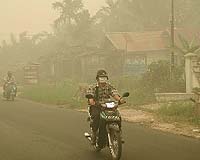
Kuala Lumpur (AFP) May 28, 2006 Indonesia has said the choking haze that annually blankets parts of Southeast Asia will be reduced this year as it cracks down on oil palm plantations that clear land by burning. Indonesia's Agriculture Minister Anton Apriyantono said authorities would enforce a 2004 law that imposes stiff penalties on plantations that burn land, a practice largely blamed for contributing to the haze. "We believe that this year we can reduce the problem of haze because the commitment is there," Apriyantono told AFP in a weekend interview at the conclusion of a three-day visit here. "We will enforce this and we will apply our role," he said. "The sanction for burning is very high so we believe this act can be effective." The law imposes a maximum 10-year jail term and 10 billion rupiah (1.08 million dollars) in fines on plantations that defy the regulation. Haze caused by burning in Indonesia and some parts of Malaysia to make way for crops is an annual problem that afflicts countries in the region including Singapore and Thailand. The worst-ever bout, in 1997 and 1998, cost the region an estimated 9.0 billion dollars in damage by disrupting air travel and other business activities. Last year, haze from fires on Indonesia's Sumatra island hit Kuala Lumpur and towns in Malaysia's north and its west coast, as well as parts of Thailand. The pall of smoke and dust triggered a state of emergency in two Malaysian coastal towns and crisis talks between Malaysia and Indonesia. Apriyantono said authorities also had to contend with ordinary Indonesians who traditionally raze land to make way for crops, but that plantations had committed themselves to stop the burning. "They are ready to follow through and we will also provide the technology to plant without burning," he said. The minister, who signed a pact with Malaysia during his visit to boost the countries' palm oil, cocoa and pepper sectors, also said both nations were planning a campaign to counter what they say are negative perceptions about palm oil. Conservationists say that plantations, besides being blamed for the regional haze, are permanently destroying habitats for animals such as endangered orangutans, while health fears persist over palm oil as a food ingredient. "We would like to do a campaign about palm oil," said Apriyantono, who disputed the charges. "This is something that is totally wrong about the negative campaign, about destroying the forests and orangutans and that it's dangerous for health," he said. Community Email This Article Comment On This Article Related Links Forestry News - Global and Local News, Science and Application
 Vicious Cycle Of Rainforest Destruction
 Leeds UK (SPX) May 23, 2006
Rainforests and savannas contain 70 percent of the world's plants and are critical to the health of our planet. A new 1.6m international project involving researchers from the Leeds Earth and Biosphere Institute is looking at the impact of global warming on these sensitive areas. |
|
|

| The content herein, unless otherwise known to be public domain, are Copyright 1995-2006 - SpaceDaily.AFP and UPI Wire Stories are copyright Agence France-Presse and United Press International. ESA PortalReports are copyright European Space Agency. All NASA sourced material is public domain. Additionalcopyrights may apply in whole or part to other bona fide parties. Advertising does not imply endorsement,agreement or approval of any opinions, statements or information provided by SpaceDaily on any Web page published or hosted by SpaceDaily. Privacy Statement |