|
 |
 |
 |
 |
 |
 |
 |
 |

 |
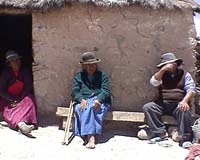
Indigenous people can offer climate change solutions: IUCN
Geneva (AFP) March 14, 2008 Honduras' Quezungal farmers have an age-old trick to protect their crops from hurricanes -- planting them under trees whose roots would anchor the soil, thereby holding the crops steady. Not just these farmers, but many indigenous people around the world are sitting on a treasure trove of traditional knowledge that could be mined as the world seeks adaptation strategies to deal with climate change, the International Union for Conservation of Nature said on Monday. "Indigenous people have a lot of techniques to adapting to climate change that we can learn from," the group's chief scientist Jeffrey McNeely told journalists in Geneva. These are strategies including crop diversification in order to minimise the risk of harvest failure, or change in food storage methods including drying or smoking foods according to climate variability. "They are not just victims, because of their long dependance on nature they've developed strategies to cope with climate change and extreme natural events which still have as much relevance today as they did hundreds of years ago," said IUCN Director General Julia Marton-Lefevre. However, these populations are also the most vulnerable to climate change, and are seeing effects of climatic changes rendering unreliable the knowledge they have accumulated about the world. For example, Indonesia's East Kalimantan hunter-gatherer Punan people look out for a full moon when planning to plant fruit trees, as it increases the chances of a yield of large fruits. On the other hand, the day when the moon is shaped like a letter 'c' in reverse is the day to avoid cultivating fruit trees and rice. "But with the changes of climate these lunar signals may no longer coincide with the favourable times for these activities and the Punan may be misled in taking their decisions," said the IUCN in its report. Urging more involvement of indigenous people in the climate change dialogue, McNeely said: "The people who are hardly being mentioned are the ones most likely to be heavily impacted by climate change." In December, a group of indigenous people protested outside a UN climate change conference in Bali, Indonesia, saying that they have been excluded from key talks on the issue. Marcial Arias, one of Panama's Kuna people, said then of the conference: "There are no name places for indigenous people, there are no seats for indigenous people. They want us to beg on our knees to be given the floor, but we have the right to participate." Community Email This Article Comment On This Article Related Links Climate Science News - Modeling, Mitigation Adaptation
 Increased Carbon Dioxide In Atmosphere Linked To Decreased Soil Organic Matter
 Urbana IL (SPX) Mar 13, 2008
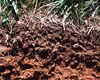
A recent study at the University of Illinois created a bit of a mystery for soil scientist Michelle Wander - increased carbon dioxide in the atmosphere was expected to increase plant growth, increase plant biomass and ultimately beef up the organic matter in the soil -- but it didn't. What researchers found instead was that organic matter decay increased along with residue inputs when carbon dioxide levels were increased and they think the accelerated decay was due to increased moisture in the soil. |
|
|

| The content herein, unless otherwise known to be public domain, are Copyright 1995-2007 - SpaceDaily.AFP and UPI Wire Stories are copyright Agence France-Presse and United Press International. ESA Portal Reports are copyright European Space Agency. All NASA sourced material is public domain. Additional copyrights may apply in whole or part to other bona fide parties. Advertising does not imply endorsement,agreement or approval of any opinions, statements or information provided by SpaceDaily on any Web page published or hosted by SpaceDaily. Privacy Statement |