|
 |
 |
 |
 |
 |
 |
 |
 |

 |
India To Set Up Largest Asian Telescope In Himalayas In 2012
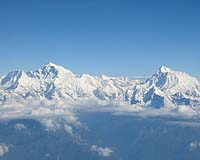
New Delhi (RIA Novosti) Aug 07, 2007 A vast telescope to be made by Russian and Belgian firms will be installed in India's Himalayas in 2012, the director of an Indian research institute said Monday. Asia's largest telescope "will enable us to see four to five times deeper into space than before, and receive high-quality images," said Professor Ram Sagal of the Aryabhatta Research Institute of Observational Sciences. An optical glass plant in Lytkarino, near Moscow, will make a mirror for the telescope 3.6 meters wide, and Belgian partners will assemble the unit and test it before sending it to India. The Belgium government has allocated 2 million euros ($2.7 million) for project, about 10% of the telescope's total cost, and Russia is also considering contributing one million euros. Sagar said the participants in the project would be given access to space research in proportion to their contributions. The institute's director said India's favorable geographical position made it possible to observe a substantial portion of space, and cited the low cost of taking images from telescopes in India as an advantage.
Source: RIA Novosti Community Email This Article Comment On This Article Related Links Space Telescope News and Technology at Skynightly.com
 The Planet, The Galaxy And The Laser
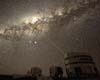 Paranal, Chile (ESO) Aug 05, 2007
On the night of 21 July, ESO astronomer Yuri Beletsky took images of the night sky above Paranal, the 2600m high mountain in the Chilean Atacama Desert home to ESO's Very Large Telescope. The amazing images bear witness to the unique quality of the sky, revealing not only the Milky Way in all its splendour but also the planet Jupiter and the laser beam used at Yepun, one of the 8.2-m telescopes that make up this extraordinary facility. |
|
|

| The content herein, unless otherwise known to be public domain, are Copyright 1995-2007 - SpaceDaily.AFP and UPI Wire Stories are copyright Agence France-Presse and United Press International. ESA Portal Reports are copyright European Space Agency. All NASA sourced material is public domain. Additional copyrights may apply in whole or part to other bona fide parties. Advertising does not imply endorsement,agreement or approval of any opinions, statements or information provided by SpaceDaily on any Web page published or hosted by SpaceDaily. Privacy Statement |