|
 |
 |
 |
 |
 |
 |
 |
 |

 |
India Says It Will Keep Nuclear Test Option Open
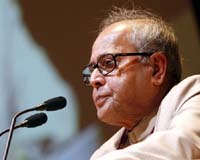
New Delhi (AFP) Dec 19, 2006 India said on Tuesday it will keep open the option to conduct more nuclear weapons tests despite a deal with the United States to access long-denied Western civilian nuclear technology. "We will keep our options open to conduct nuclear tests and the decision will be left to the wisdom of the decision-making authority at that point of time," Foreign Minister Pranab Mukherjee announced in parliament. "We will not like to foreclose the option," he said during a debate on the deal. US President George W. Bush signed the controversial pact into law Monday and hailed it as a sign of warm ties between the world's two largest democracies. The agreement will pave the way for US sales of nuclear fuel and know-how to India for the first time since New Delhi tested a nuclear device in 1974, becoming an international atomic pariah. Mukherjee's comments came after opposition leaders warned the deal could stump the nuclear programme in India. In 1998 India exploded nuclear weapons and then imposed a unilateral moratorium on further testing. Some Western critics warn that exempting India from the US ban on nuclear exports to non-signatories of the Nuclear Non-Proliferation Treaty (NPT) may hurt US efforts to confront North Korea and Iran over their atomic ambitions. Mukherjee attacked the NPT and said India, which declared itself a fully-fledged nuclear weapons state after 1998, would not sign the accord. "We consider it a fraud treaty which is creating a class where the nuclear weapons states will have the right of stockpiling, experiments. We refuse to accept this discriminatory treatment," he told parliament's upper house. Allaying fears voiced by opposition leaders as well as a section of India's scientific community, Mukherjee also said the government would not accept any pre-conditions in the treaty that would cap India's strategic programme. "This is a civil nuclear agreement and not an arms control measure," Mukherjee said. "We are not accepting any additional commitment and we are just sticking to the voluntary moratorium which we have declared. Also, we are not going to accept any treaty-bound commitment," Mukherjee said. The foreign minister said India and the US would now embark on "hard negotiations" before the start of supply of American nuclear technology to India. "In my mind the real negotiation will start now because we will have to enter into an 123 Agreement with the US," he said. The pact will be the sole binding document defining the terms of the anticipated nuclear commerce arising from the deal, which the US Chamber of Commerce says could open up 100 billion dollars in opportunities for American businesses. The bilateral agreement will have to be approved again by the US Congress, controlled next year by Democrats, who are known for their strong non-proliferation views.
Source: Agence France-Presse Community Email This Article Comment On This Article Related Links Nuclear Non-Proliferation Treaty Learn about nuclear weapons doctrine and defense at SpaceWar.com Learn about nuclear weapons doctrine and defense at SpaceWar.com Learn about missile defense at SpaceWar.com All about missiles at SpaceWar.com Learn about the Superpowers of the 21st Century at SpaceWar.com
 Gag Claim On Iran Policy Development
 Washington (UPI) Dec 19, 2006
 A former White House staffer says the administration is using spurious claims of secrecy to stifle an embarrassing critique of its Iran policy, but officials say they are still working through a routine classification review of the piece. |
|
|

| The content herein, unless otherwise known to be public domain, are Copyright 1995-2006 - SpaceDaily.AFP and UPI Wire Stories are copyright Agence France-Presse and United Press International. ESA PortalReports are copyright European Space Agency. All NASA sourced material is public domain. Additionalcopyrights may apply in whole or part to other bona fide parties. Advertising does not imply endorsement,agreement or approval of any opinions, statements or information provided by SpaceDaily on any Web page published or hosted by SpaceDaily. Privacy Statement |