|
 |
 |
 |
 |
 |
 |
 |
 |

 |
India Has Plans For New Jet, Long-Range UAV
Bangalore, India (AFP) Feb 11, 2005 India is planning to develop a new jet fighter and a long-range version of an unmanned aircraft, defense officials said Feb 11. The "Lead-in Jet Fighter" is at the drawing board stage and would be a natural progression from India's existing homegrown Light Combat Aircraft (LCA), said N. Natarajan, scientific advisor to the defense minister. "The technologies and capabilities which the Aeronautical Development Agency has acquired from the Light Combat Aircraft can been put to use in the new jet fighter," he said. "The jet will have dual roles of a trainer and fighter." During the making of the LCA, engineering, design and computer aided manufacturing capabilities had been discovered that could be integrated and used in the manufacture of a new aircraft, Natarajan said. "The natural possibility is a Lead-in Jet Fighter," he told a media conference held at a five-day air show in Bangalore, which ended Feb. 13. The Indian air force has placed an order with the state-run aircraft maker Hindustan Aeronautics Limited for 40 LCA at a cost of about $900 million. The first is due to be delivered to the air force in 2008. The manufacture of the LCA, fitted with a General Electric engine, had to face a number of hurdles after the U.S. slapped sanctions on India following the 1998 nuclear tests. Those sanctions were lifted in 2001. D. Banerjee, chief controller of the Defence Research and Development Organisation, said India was also working on a long-range unmanned aerial vehicle program after successfully developing Nishant, a pilotless vehicle. "The process of exploring tie-ups with private companies and Hindustan Aeronautics Limited and other companies is currently on," Banerjee said. He said Nishant had met all the requirements of the Indian military which ordered about eight aircraft. "In the future there is a possibility of another order from the air force," he said. Nishant, the remotely piloted vehicle for battlefield surveillance and reconnaissance, is used for target acquisition, target designation, damage assessment and electronic surveillance. It has a range of 100 kilometers (62 miles) and weighs 360 kilograms (792 pounds). Community Email This Article Comment On This Article Related Links SpaceDaily Search SpaceDaily Subscribe To SpaceDaily Express UAV News - Suppliers and Technology
 USAF UAV Battlelab Sponsors Demo Of Proxy Aviation's SkyForce
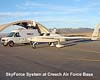 Germantown MD (SPX) Jan 11, 2006
Proxy Aviation Systems recently announced the United States Air Force (USAF) Unmanned Aerial Vehicle Battlelab (UAVB) sponsored and cooperated in a demonstration of SkyForce, Proxy Aviation's unmanned aircraft system. |
|
|

| The content herein, unless otherwise known to be public domain, are Copyright 1995-2006 - SpaceDaily.AFP and UPI Wire Stories are copyright Agence France-Presse and United Press International. ESA PortalReports are copyright European Space Agency. All NASA sourced material is public domain. Additionalcopyrights may apply in whole or part to other bona fide parties. Advertising does not imply endorsement,agreement or approval of any opinions, statements or information provided by SpaceDaily on any Web page published or hosted by SpaceDaily. Privacy Statement |