|
 |
 |
 |
 |
 |
 |
 |
 |

 |
India And Pakistan Swap Nuclear Site Lists
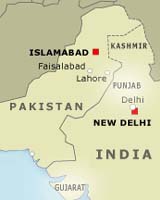
Islamabad (AFP) Jan 02, 2007 Pakistan and India on Monday exchanged lists of their nuclear sites under an agreement to swap such information annually on New Year's Day to prevent attacks against each others nuclear facilities, the foreign ministry said. The agreement signed in 1988 between the South Asian arch rivals came into force in 1991 and the first such exchange of information was on January 1, 1992. Under the agreement both Pakistan and India are to refrain from attacking each other's nuclear facilities in the event of a war. "Lists of nuclear sites were exchanged between Pakistan and India today," foreign ministry spokeswoman Tasnim Aslam told AFP. India conducted nuclear weapons tests in May 1998 and Pakistan, in a tit-for-tat response, detonated its own devices a few days later. The rivals have fought three wars, two of them over the Himalayan region of Kashmir which is divided between them and claimed in full by both. After coming close to another war in 2002, in January 2004 they began talks to resolve all their disputes including Kashmir. In October 2005 the two countries formalised an agreement on pre-notification of ballistic missile tests. They have also set up a telephone hotline to prevent accidental nuclear conflict. The India-Pakistan peace process was put back on track after foreign secretary-level talks in New Delhi in mid-November, during which the two sides agreed to set up a new anti-terror panel. India had put on hold the nearly three-year-old talks in the face of public outrage over July's deadly attacks on Mumbai's commuter network, which New Delhi blamed on Pakistan's spy agency and a Pakistan-based militant group. Islamabad denied any involvement in the blasts, which killed 186 people. New Delhi accuses Islamabad of arming and training Islamic militants battling its rule in Muslim-majority Indian Kashmir and sponsoring attacks elsewhere in the country. All rights reserved. � 2004 Agence France-Presse. Sections of the information displayed on this page (dispatches, photographs, logos) are protected by intellectual property rights owned by Agence France-Presse. As a consequence, you may not copy, reproduce, modify, transmit, publish, display or in any way commercially exploit any of the content of this section without the prior written consent of Agence France-Presse. Community Email This Article Comment On This Article Related Links Learn about nuclear weapons doctrine and defense at SpaceWar.com Learn about nuclear weapons doctrine and defense at SpaceWar.com Learn about missile defense at SpaceWar.com All about missiles at SpaceWar.com Learn about the Superpowers of the 21st Century at SpaceWar.com
 South Korean Leadership In Deepening Crisis Of State
 Seoul (UPI) Dec 29, 2006
 South Korea is facing a leadership crisis as the popularity of its reformist leader and his party has plunged to record lows this year following a spate of scandals, policy failures and political wrangling. In a move to prepare for next year's presidential election, top leaders of the ruling Uri Party decided this week to "divorce" from maverick President Roh Moo-hyun and his loyalists and create a new political party, which can change the country's reform-dominated political landscape. |
|
|

| The content herein, unless otherwise known to be public domain, are Copyright 1995-2006 - SpaceDaily.AFP and UPI Wire Stories are copyright Agence France-Presse and United Press International. ESA PortalReports are copyright European Space Agency. All NASA sourced material is public domain. Additionalcopyrights may apply in whole or part to other bona fide parties. Advertising does not imply endorsement,agreement or approval of any opinions, statements or information provided by SpaceDaily on any Web page published or hosted by SpaceDaily. Privacy Statement |