|
 |
 |
 |
 |
 |
 |
 |
 |

 |
Increase In Carbon Dioxide Emissions Accelerating
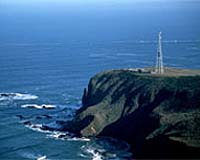
Canberra, Australia (SPX) Nov 29, 2006 According to the co-Chair of the Global Carbon Project, CSIRO Marine and Atmospheric Research scientist Dr Mike Raupach, 7.9 billion tonnes of carbon were emitted into the atmosphere as carbon dioxide in 2005 and the rate of increase is accelerating. "From 2000 to 2005, the growth rate of carbon dioxide emissions was more than 2.5 per cent per year, whereas in the 1990s it was less than one per cent per year," Dr Raupach says. He says this indicates that recent efforts globally to reduce emissions have had little impact on emissions growth. "Recent emissions seem to be near the high end of the fossil fuel use scenarios used by the Intergovernmental Panel on Climate Change (IPCC). On our current path, it will be difficult to rein-in carbon emissions enough to stabilise the atmospheric carbon dioxide concentration at 450 ppm." Dr Raupach's figures show that while China demonstrates the highest current growth rate in emissions, its emissions per person are still below the global average and its accumulated contribution since the start of the industrial revolution around 1800 is only five per cent of the global total. This compares to the US and Europe which have each contributed more than 25 per cent of accumulated global emissions. Dr Raupach says that the amount of emitted carbon dioxide remaining in the atmosphere fluctuates from year to year due to natural factors such as El Nino. However, he says that on average, nearly half of all emissions from fossil fuel use and land-use changes remain in the atmosphere, with the rest being absorbed by the land and oceans. "When natural variability is smoothed out, 45 per cent of emissions have remained in the atmosphere each year over the past 50 years," he says. "A danger is that the land and oceans might take up less carbon dioxide in the future than they have in the past, which would increase the rate of climate change caused by emissions." The latest findings on greenhouse gas emissions are supported by measurements of the subsequent concentrations of carbon dioxide in the atmosphere. Dr Paul Fraser, also from CSIRO Marine and Atmospheric Research, says that atmospheric concentrations of carbon dioxide grew by two parts per million in 2005, the fourth year in a row of above-average growth. "To have four years in a row of above-average carbon dioxide growth is unprecedented," Dr Fraser says. Dr Fraser says the 30-year record of air collected at the Australian Bureau of Meteorology's observation station in Cape Grim, showed growth rates of just over one part per million in the early 1980s, but in recent years carbon dioxide has increased at almost twice this rate. "The trend over recent years suggests the growth rate is accelerating, signifying that fossil fuels are having an impact on greenhouse gas concentrations in a way we haven't seen in the past." Drs Raupach and Fraser presented their latest findings last week during the Annual Science Meeting at Tasmania's Cape Grim Baseline Air Pollution Station, which is managed by the Australian Bureau of Meteorology to monitor and study global atmospheric composition in a program led by CSIRO and the Bureau. Community Email This Article Comment On This Article Related Links Global Carbon Project The Air We Breathe at TerraDaily.com
 Researchers Gaze At Cloud Formations
 Helsinki (UPI) Nov 22, 2006
Finnish researchers analyzing cloud formations say ozone destruction in the Earth's stratosphere might be occurring at a faster pace than thought. Anatoli Bogdan and colleagues at the University of Helsinki say they reached that conclusion after studying low-temperature thin and subvisible cirrus, or SVC. |
|
|

| The content herein, unless otherwise known to be public domain, are Copyright 1995-2006 - SpaceDaily.AFP and UPI Wire Stories are copyright Agence France-Presse and United Press International. ESA PortalReports are copyright European Space Agency. All NASA sourced material is public domain. Additionalcopyrights may apply in whole or part to other bona fide parties. Advertising does not imply endorsement,agreement or approval of any opinions, statements or information provided by SpaceDaily on any Web page published or hosted by SpaceDaily. Privacy Statement |