|
 |
 |
 |
 |
 |
 |
 |
 |

 |
In-Orbit Validation Contract: A Further Step Forward For Galileo
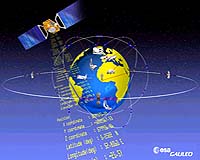
Paris (ESA) Dec 22, 2004 The Galileo project is now well and truly taking shape, with today's signing of a second contract concerning the In-Orbit Validation phase, following that signed in July 2003 for two test satellites. The European Space Agency and Galileo Industries have signed a 150m euro contract, as a first stage towards signing an approximately 950m euro contract covering the overall IOV phase. "This marks a further step forward for Galileo", says Giuseppe Viriglio, Director of EU and Industrial Programmes at the Agency. "In line with the recent EU Transport Council green light for final deployment of the constellation, ESA is securing the foundations for this unique satellite locating and positioning system." For Gunter Stamerjohanns, chief executive officer of Galileo Industries: "This contract marks a key step towards completing this major European technology project. Galileo Industries is proud to be playing a leading part in meeting this enormous challenge." The contract provides the basis and the technical activities necessary for in-orbit validation of the Galileo system. It gives preliminary authorisation to proceed with the whole of this work, over a six-month period. This work notably concerns the management of the programme and the choice of engineering systems and technical support required to maintain the overall credibility of the scheduling and ensure system coherence. In-orbit validation involves the delivery of the first four satellites in the Galileo constellation of 30, along with a number of ground stations. Subsequently, the programme will enter its deployment phase, which will cover the entire network of ground infrastructure and the launch of the remaining 26 satellites which will complete the constellation. At present, the test phase has started, with the launch of a first test satellite onboard a Soyuz launcher expected by end-2005. To ensure that this phase is a success, two satellites are being built in parallel by European industry. Galileo is a joint initiative of the European Space Agency and the European Union. It will be the first-ever global satellite-navigation system designed for civilian needs that delivers guaranteed continuity of services, unlike the American GPS. The two systems will nevertheless be compatible and interoperable. Community Email This Article Comment On This Article Related Links Galileo at EU SpaceDaily Search SpaceDaily Subscribe To SpaceDaily Express GPS Applications, Technology and Suppliers
 Galileo GIOVEA Using Marotta Equipment For Its Propulsion Systems
 Cheltenham, England (SPX) Jan 09, 2006
Marotta UK is pleased to announce that it designed, developed and qualified equipment for the cold gas propulsion systems on board the Galileo GIOVE-A, part of Europe's Galileo navigation program, successfully launched by Surrey Satellite Technology (SSTL). |
|
|

| The content herein, unless otherwise known to be public domain, are Copyright 1995-2006 - SpaceDaily.AFP and UPI Wire Stories are copyright Agence France-Presse and United Press International. ESA PortalReports are copyright European Space Agency. All NASA sourced material is public domain. Additionalcopyrights may apply in whole or part to other bona fide parties. Advertising does not imply endorsement,agreement or approval of any opinions, statements or information provided by SpaceDaily on any Web page published or hosted by SpaceDaily. Privacy Statement |