|
 |
 |
 |
 |
 |
 |
 |
 |

 |
Improvised Technology Drives Tanks Forward
Washington (UPI) Feb 29, 2008 Improvised explosive devices are now being hailed as the wonder weapon that may end the tank's supremacy on the battlefield. In fact, like any weapon of war, the Main Battle Tank has never been invincible. A surprising number of weapons systems have proven effective against it -- usually in very favorable and exceptionally specific circumstances, but the tank's overall effectiveness and battlefield supremacy has endured. As early as 1920, the tank was hailed as obsolete because the Soviet Red Army was prevented from conquering Poland and sweeping into exhausted Germany by large numbers of Polish cavalry at the Battle of the Vistula. Tanks and armored cars were too few and unreliable to prevent the Polish horsemen from taking advantage of large gaps in the Soviet lines and sweeping between them. Twenty years later, however, German tanks were far more numerous and better directed, and the Polish cavalry men were cut down by the tens of thousands in a matter of days. Finland was the next country that seemed to come up with an unexpected defense that destroyed hundreds of Soviet tanks. In the Winter War of 1939-40, the Finns used two weapons, bottles of gasoline with burning rags for fuel that they called Molotov cocktails after Stalin's granite-faced and brutal foreign minister Vyacheslav Molotov, and -- even more remarkably -- high-pressure water hoses. In the ferocious cold of the Finnish winter, jets of water from the hoses froze as soon as they hit the Soviet tanks, entombing their crews within them. Misled by the tactical ineptitude of a Red Army still reeling from Stalin's purges of its officer corps during the 1930s purges, Adolf Hitler sent his Wehrmacht to invade the Soviet Union in 1941. At first, German tanks seemed invincible and it became clear that the success of the Finns against a poorly organized invader in the unique circumstances of their own hostile environment could not be widely replicated. But as early as 1944, the Wehrmacht had developed a reliable, cheap, easily produced anti-tank weapon of its own -- the panzerfaust, which prefigured the handheld, wire-guided Soviet anti-tank missiles used by the Egyptian infantry to great effect against Israeli tanks in the 1973 Yom Kippur War or War of Ramadan. In close street fighting, or from well dug-in defenses, the panzerfaust was deadly. But even it could only slow down, but not avert, the drives of the enormous armored pincers from East and West that destroyed Hitler's Third Reich in the campaigns of 1944-45. The U.S. Army by the closing years of World War II already had its famous bazooka, but in the first months of the 1950-53 Korean War, hundreds of U.S. soldiers died because the bazooka was all too often ineffective against the frontal armor of the latest Soviet-built and provided tanks. Tanks have also historically fallen victim in large numbers to the effective close ground support provided by tactical air power. The British Hawker Typhoon was the outstanding flying platform for such weapons systems in the European Theater of Operations in 1944-45. To the east, the Red Army built more than 36,000 Ilyushin Il-2 Shturmoviks that proved crucial to their gutting of the main forces of the Wehrmacht. But in the end, it was the nations that produced the most tanks that won the war on the Eurasian land mass. The Soviet Union's tens of thousands of T-34s and the United States' tens of thousands of Shermans backed by their superb heavy artillery ultimately swamped the Nazi Wehrmacht. Next: Using tanks to conquer and hold countries Community Email This Article Comment On This Article Related Links The latest in Military Technology for the 21st century at SpaceWar.com
 DRS Tech Gets Contract To Supply Marine Corps With Rugged Tablet Computers
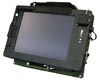 Parsippany NJ (SPX) Jul 10, 2007
DRS Technologies has received a $5 million award as part of a previous contract to provide military rugged tablet (MRT) computers and peripheral equipment for the U.S. Marine Corps' Target Location Designation Handoff System (TLDHS) program. DRS received the order from Stauder Technologies in St. Peters, Missouri. For this contract the company's DRS Tactical Systems business unit in Melbourne, Florida, will produce hundreds of the handheld MRT computers and peripheral equipment. |
|
|

| The content herein, unless otherwise known to be public domain, are Copyright 1995-2007 - SpaceDaily.AFP and UPI Wire Stories are copyright Agence France-Presse and United Press International. ESA Portal Reports are copyright European Space Agency. All NASA sourced material is public domain. Additional copyrights may apply in whole or part to other bona fide parties. Advertising does not imply endorsement,agreement or approval of any opinions, statements or information provided by SpaceDaily on any Web page published or hosted by SpaceDaily. Privacy Statement |