|
 |
 |
 |
 |
 |
 |
 |
 |

 |
Important events in China's space programme
Beijing (AFP) Oct 24, 2007 China on Wednesday launched the Chang'e I, its first-ever lunar orbiter, as part of its quest to put a man on the moon by around 2020. The following are the key events in China's space programme: -- 1956: China opens up its first institute on missile and rocket research. -- 1970: China launches its first satellite, the "East is Red I," aboard a Long March carrier rocket. -- 1975: China launches its first recoverable satellite, which returns to Earth after a three-day flight. -- 1985: China announces it will offer commercial satellite launch services for international clients. -- Early 1990s: China suffers a series of launch failures in its commercial satellite endeavours. -- 1992: China begins its Shenzhou programme aimed at sending a man into space. -- 1999: China launches the first flight in the Shenzhou series, an unmanned mission. -- 2003: Yang Liwei becomes China's first man in space on the Shenzhou V mission. He returns after 21 hours and 14 trips around the Earth. -- 2004: China launches 10 satellites in eight successful rocket launches, the most-ever in one year. -- 2005: The Shenzhou VI carries two men into space in the nation's second manned flight. They spend five days on their 3.25-million-kilometre (two-million-mile) mission in orbit. -- June 2007: China launches the 100th flight of its Long March series of rockets as it remains a major player in the area of global satellite launch services. -- Oct 24, 2007: China launches the Chang'e I, the first mission in its lunar programme. Community Email This Article Comment On This Article Related Links The Chinese Space Program - News, Policy and Technology China News from SinoDaily.com
 Asia's space race heats up as China launches first lunar orbiter
 Beijing (AFP) Oct 24, 2007
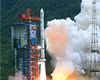
Asia's space race heated up on Wednesday as China launched its first lunar orbiter, an event hailed in the world's most populous nation as a milestone event in its global rise. |
|
|

| The content herein, unless otherwise known to be public domain, are Copyright 1995-2007 - SpaceDaily.AFP and UPI Wire Stories are copyright Agence France-Presse and United Press International. ESA Portal Reports are copyright European Space Agency. All NASA sourced material is public domain. Additional copyrights may apply in whole or part to other bona fide parties. Advertising does not imply endorsement,agreement or approval of any opinions, statements or information provided by SpaceDaily on any Web page published or hosted by SpaceDaily. Privacy Statement |