|
 |
 |
 |
 |
 |
 |
 |
 |

 |
Important New Zealand fossil find reported
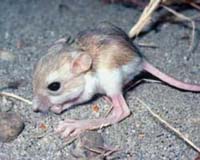
Adelaide, Australia (UPI) Dec 18, 2006 An Australian-led team has discovered a unique, primitive type of land mammal that lived at least 16 million years ago in New Zealand. The team, led by University of Adelaide paleontologist Trevor Worthy, said the discovery of tiny fossilized bones of the mouse-like creature is the first hard evidence that New Zealand once had its own indigenous land mammals. The scientists say their finding could prompt a major rewrite of prehistory textbooks. Worthy and colleagues from New Zealand discovered fossilized parts of a jaw and a leg from the mammal, unearthed in sediment from the St. Bathans lake bed on New Zealand's South Island. "Scientists have long held the view that New Zealand has this weird and wonderful avian biota that lived on the ground because there were no mammals to impede or compete with birds," said Worthy. "It appears that this little mouse-like animal was part of the fauna on the ancient Gondwana supercontinent and it got stuck on New Zealand when the latter separated more than 80 million years ago." The findings appear in the current issue of the Proceedings of the National Academy of Sciences. Community Email This Article Comment On This Article Related Links Darwin Today At TerraDaily.com
 Study looks at evolution of bird flight
 Providence, R.I. (UPI) Dec 18, 2006
 U.S. scientists say they've discovered that a single ligament at the shoulder joint stabilizes the wings of birds during flight. |
|
|

| The content herein, unless otherwise known to be public domain, are Copyright 1995-2006 - SpaceDaily.AFP and UPI Wire Stories are copyright Agence France-Presse and United Press International. ESA PortalReports are copyright European Space Agency. All NASA sourced material is public domain. Additionalcopyrights may apply in whole or part to other bona fide parties. Advertising does not imply endorsement,agreement or approval of any opinions, statements or information provided by SpaceDaily on any Web page published or hosted by SpaceDaily. Privacy Statement |