
 |
 |
 |
 |
 |
 |
 |
 |
 |

 |
Impacts Of Climate Change On Lakes
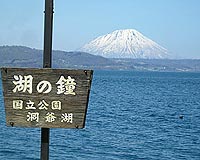
Sapporo, Japan (SPX) Oct 23, 2008 Climate change will have different effects on lakes in warmer and colder regions of the globe. This is the conclusion reached by Japanese and German researchers following studies of very deep caldera lakes in Japan. Scientists from Hokkaido University, the Hokkaido Institute of Environmental Sciences, Kagoshima University and the Helmholtz Centre for Environmental Research (UFZ) compared current measurements with measurements taken 70 years ago. This confirmed a rise in temperatures in the deep water layers of lakes in the south of Japan, while the deep water temperatures of lakes in the north remained the same. Rising temperatures can lead to changes in nutrient exchange and turnover in the water. In certain circumstances, winter circulation behaviour can be so severely affected by rising temperatures and other climatic factors that oxygen supplies to the lower depths become insufficient for many organisms, leading to an accumulation of nutrients in the deep water, say the researchers writing in Geophysical Research Letters. Measurements from 2005 and 2007 in deep Japanese caldera lakes provide information about the distribution of dissolved nutrients in the water. There are two reasons why this chain of lakes makes an excellent research subject for providing general information about circulation under changeable climatic conditions that will be valid for lakes outside the research area. Firstly, the lakes cover a climate gradient that stretches from the south of Japan to the northern island of Hokkaido. Secondly, oxygen and nutrient exchange between the deep water and the surface in the lakes under investigation is controlled almost exclusively by temperature differences. The researchers found that almost all of the lakes studied displayed a good distribution of the dissolved nutrients, despite their enormous depths of up to 423 metres (Lake Tazawa, Honshu). The lakes can be divided into two main depth-circulation categories based on their climatic conditions. The researchers expect deep water temperatures of colder lakes (e.g. Lake Shikotsu, Hokkaido) to remain unchanged in warmer winters, provided the temperature rises are not excessive, while deep water temperatures in warmer lakes are likely to rise. This was confirmed by comparisons with single-point measurements from the 1930s. The scientists warn that a very steep rise in winter temperatures over the years results in water temperatures that do not fall anywhere near as low as the temperatures of the previous years and depth circulation can cease altogether (Lake Ikeda, Kyushu). In such circumstances oxygen supplies and nutrient distribution would be interrupted, which would have impacts on organisms. Water quality in lakes is an important economic factor for tourism, water companies and fishing businesses. Together with colleagues in Australia, Canada and Spain, UFZ scientists are therefore working on numeric lake simulation models which are designed to provide predictions about water quality under altered conditions. Community Email This Article Comment On This Article Share This Article With Planet Earth
Related Links Helmholtz Centre for Environmental Research (UFZ) Climate Science News - Modeling, Mitigation Adaptation
 Cloud-Hopping In The Pacific Improves Climate Predictions
 London, UK (SPX) Oct 22, 2008
The clouds being investigated in this study are known as marine stratocumulus clouds. They tend to form adjacent to continents where deep, cold, upwelling water reaches the sea-surface. This cools the surface air, condensation occurs and clouds form. These clouds are capped by warm air that descends into this region. |
|
|

| The content herein, unless otherwise known to be public domain, are Copyright 1995-2007 - SpaceDaily.AFP and UPI Wire Stories are copyright Agence France-Presse and United Press International. ESA Portal Reports are copyright European Space Agency. All NASA sourced material is public domain. Additional copyrights may apply in whole or part to other bona fide parties. Advertising does not imply endorsement,agreement or approval of any opinions, statements or information provided by SpaceDaily on any Web page published or hosted by SpaceDaily. Privacy Statement |
 del.icio.us
 Digg
Digg Reddit
 YahooMyWeb
 Google
 Facebook