
 |
 |
 |
 |
 |
 |
 |
 |
 |

 |

Boulder, Colo. (UPI) Aug 3, 2010 Scientists drilling more than a mile deep into ice in Greenland say their findings could assess the risk of abrupt future climate changes on Earth. Researchers from the University of Colorado at Boulder, as part of an international science team, hit bedrock at 1 1/2 miles deep last week after two summers of drilling, a university release said Monday. The team recovered ice from the Eemian interglacial period of 115,000 to 130,000 years ago, when temperatures were 3.6 to 5.4 degrees Fahrenheit above today's temperatures. During the Eemian -- the most recent interglacial period on Earth -- there was substantially less ice on Greenland, and sea levels were more than 15 feet higher than today, the release said. Annual ice layers near the bottom of the core are expected to reveal crucial information about how Earth's climate functions, CU-Boulder Professor Jim White, lead U.S. investigator on the project, said. The new ice cores will yield data on past changes in temperatures and greenhouse gas concentrations in the interglacial period, White said, making it the best example which may help predict future climate change on Earth. White applauded the international character of the effort. "Scientists from 14 countries have come together in a common effort to provide the science our leaders and policy makers need to plan for our collective future," White said.
Share This Article With Planet Earth
Related Links Beyond the Ice Age

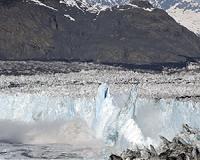 Whether Glaciers Float May Affect Sea-Level Rise
Washington DC (SPX) Jul 29, 2010 Glaciers that detach from the seafloor and begin floating create larger icebergs than glaciers that stay on the sea floor, researchers have found. Floating glaciers also produce icebergs more erratically. These new observations may help researchers better understand and predict iceberg production from glaciers and ice sheets, improving estimates of sea-level rise due to climate change. ... read more |
|
|
| The content herein, unless otherwise known to be public domain, are Copyright 1995-2010 - SpaceDaily. AFP and UPI Wire Stories are copyright Agence France-Presse and United Press International. ESA Portal Reports are copyright European Space Agency. All NASA sourced material is public domain. Additional copyrights may apply in whole or part to other bona fide parties. Advertising does not imply endorsement,agreement or approval of any opinions, statements or information provided by SpaceDaily on any Web page published or hosted by SpaceDaily. Privacy Statement |


 del.icio.us
 Digg
Digg Reddit
 YahooMyWeb
 Google
 Facebook


