|
 |
 |
 |
 |
 |
 |
 |
 |

 |
I, RoboNet - Intelligent Telescopes Survey The Violent Skies
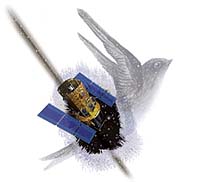
Liverpool UK (SPX) Sep 15, 2004 British astronomers are celebrating a world first that could revolutionise the future of astronomy. They have just begun a project to operate a global network of the world's biggest robotic telescopes, dubbed 'RoboNet-1.0' which will be controlled by intelligent software to provide rapid observations of sudden changes in astronomical objects, such as violent Gamma Ray Bursts, or 24-hour surveillance of interesting phenomena. RoboNet is also looking for Earth-like planets, as yet unseen elsewhere in our Galaxy. Progress in many of the most exciting areas of modern astronomy relies on being able to follow up unpredictable changes or appearances of objects in the sky as rapidly as possible. It was this that led astronomers at Liverpool John Moores University (LJMU) to pioneer the development of a new generation of fully robotic telescopes, designed and built in the UK by Telescope Technologies. Together the Liverpool Telescope (LT) and specially allocated time on the Faulkes North (FTN), soon to be joined by the Faulkes South (FTS), make up RoboNet-1.0. Commenting on the need for a network of telescopes RoboNet Project Director, Professor Michael Bode of LJMU said "Although each telescope individually is a highly capable instrument, they are still limited by the hours of darkness, local weather conditions and the fraction of the sky each can see from its particular location on planet Earth." Prof. Bode added "Astronomical phenomena are however no respecters of such limitations, undergoing changes or appearances at any time, and possibly anywhere on the sky. To understand certain objects, we may even need round-the-clock coverage - something clearly impossible with a single telescope at a fixed position on the Earth's surface." Thus was born the concept of "RoboNet" - a global network of automated telescopes, acting as one instrument able to search anywhere in the sky at any time and (by passing the observations of a target object from one telescope to the next in the network) being able to do so continuously for as long as is scientifically important. The first mystery RoboNet will examine is the origin of Gamma Ray Bursts (GRBs). Discovered by US spy satellites in the late 1960's, these unpredictable events are the most violent explosions since the Big Bang, far more energetic than supernova explosions. Yet they are extremely brief, lasting from milliseconds to a few minutes, before they fade away to an afterglow lasting a few hours or weeks. Their exact cause is still unknown, although the collapse of supermassive stars or the coalescence of exotic objects such as black holes and neutron stars are prime candidates. To study GRBs, telescopes need to be pointed at the right area of the sky extremely quickly. In October this year, NASA will launch a new satellite named Swift, in which the UK has a major involvement, and which will pinpoint the explosions of GRBs on the sky more accurately and rapidly than ever before. The co-ordinates of each burst will be relayed to telescopes on the Earth, including those of RoboNet, within seconds of their occurrence, at the rate of one event every few days. Telescopes within the UK's new RoboNet network are designed to respond automatically within a minute of an alert from Swift. It is in the first few minutes after the burst that observations are urgently required to enable astronomers to really understand the cause of these immense explosions, but until now such observations have been extremely difficult to secure. RoboNet's second major aim is to discover Earth-like planets around other stars. We now know of more than 100 extra-solar planets. However, all of these are massive planets (like Jupiter) and many are too near to their parent star, and hence too hot, to support life. RoboNet will take advantage of a phenomenon called gravitational microlensing (where light from a distant star is bent and amplified around an otherwise unseen foreground object) to detect cool planets. When a star that is being lensed in this way has a planet, it causes a short 'blip' in the light detected, which rapid-reacting telescopes such as the RoboNet network can follow up. In fact, the network stands the best chance of any existing facility of actually finding another Earth due to the large size of the telescopes, their excellent sites and sensitive instrumentation. The Particle Physics and Astronomy Research Council (PPARC) have funded the establishment of RoboNet-1.0, based around using the three giant robotic telescopes at their sites across the globe. The "glue" that holds all this together is software developed by the LJMU-Exeter University "eSTAR" project, allowing the network to act intelligently in a co-ordinated manner. Dr Iain Steele of the eSTAR project says "We have been able to use and develop new Grid technologies, which will eventually be the successor to the World Wide Web, to build a network of intelligent agents that can detect and respond to the rapidly changing universe much faster than any human." "The agents act as "virtual astronomers" collecting, analysing and interpreting data 24 hours a day, 365 days a year, alerting their flesh-and-blood counterparts only when they make a discovery." If successful, RoboNet could be expanded to the development of a larger, dedicated global network of up to six robotic telescopes. Professor Michael Bode of Liverpool John Moores University adds "We have led the world in the design and build of the most advanced robotic telescopes and now with RoboNet-1.0 we are set to lead the way in some of the most challenging and exciting areas of modern astrophysics". Community Email This Article Comment On This Article Related Links LJMU PPARC eSTAR Project SpaceDaily Search SpaceDaily Subscribe To SpaceDaily Express Space Telescope News and Technology at Skynightly.com
 Cornell's Contract For Management Of Arecibo Observatory Renewed
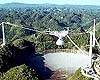 Ithaca NY (SPX) Apr 06, 2005
The National Science Foundation (NSF) has renewed Cornell University's management contract for the operation of Arecibo Observatory, the world's largest and most-sensitive single-dish radio/radar telescope.
--------------------------------------------------------- It's new. And it's downright terrific! Celestron's CPC Schmidt-Cassegrain telescope is the scope you've been waiting for! It offers new alignment technology, advanced engineering, and bold new design at a new, low price! In fact, Celestron's Professional Computerized (CPC) scope with revolutionary SkyAlign Alignment Technology redefines everything that amateur astronomers are looking for. It offers quick and simple alignment, GPS technology, unsurpassed optical quality, ease of use, advanced ergonomics, enhanced computerization and, most important, affordability. Want to view M-31 tonight? One button takes you there!
Shop for telescopes online at Telescopes.com! today!
|
|
|

| The content herein, unless otherwise known to be public domain, are Copyright 1995-2006 - SpaceDaily.AFP and UPI Wire Stories are copyright Agence France-Presse and United Press International. ESA PortalReports are copyright European Space Agency. All NASA sourced material is public domain. Additionalcopyrights may apply in whole or part to other bona fide parties. Advertising does not imply endorsement,agreement or approval of any opinions, statements or information provided by SpaceDaily on any Web page published or hosted by SpaceDaily. Privacy Statement |