|
 |
 |
 |
 |
 |
 |
 |
 |

 |
IMF Waves Through Overhaul Giving China Louder Voice
Singapore (AFP) Sep 18, 2006 The International Monetary Fund adopted a radical overhaul plan Monday giving greater voting power to China, South Korea, Mexico and Turkey to reflect their growing economic stature. The blueprint, which also envisages broader reforms to be thrashed out over the next two years, was backed by 90.6 percent of the vote by member countries, easily above the required 85 percent, the IMF said in a statement. "These governance reforms are tremendously important for the future of our institution," IMF Managing Director Rodrigo Rato said. "They will enhance our effectiveness and add legitimacy to all of the other reforms that we are implementing. There is much work to do, but this vote is a great start." The 184-member IMF, created to inject stability into the ruins of the post-war financial system, remains dominated by the United States, European countries and Japan. Despite its growing stature as a global economic powerhouse, China currently has less voting clout than Belgium and the Netherlands combined. The four countries to benefit from the changes are said by the IMF to be the only members under-represented on all four of the criteria that determine a country's quota, which in turn determine voting rights and access to funds. Those criteria are the member's gross domestic product (GDP), its openness to trade, the "variability" of its economy, in other words how volatile its growth is, and the amount of its reserves. China's quota now rises to 3.72 percent from 2.98 percent while South Korea's share jumps to 1.35 percent from 0.77 percent. Mexico goes to 1.45 percent from 1.21 percent, with Turkey's participation climbing to 0.55 percent from 0.45 percent. Mindful of criticism that the poorest countries are being left out in the reform process, the IMF plans to at least double the number of basic votes a member is allocated regardless of its economic clout. "It's a small step but an important step," US Treasury Secretary Henry Paulson said earlier of the overhaul. "Our institutions, to be relevant, have to change with the economy." German Finance Minister Peer Steinbrueck described it as "an important and a very good result". Along with its sister institution the World Bank, the IMF has come under criticism in countries such as Argentina and in Southeast Asia and Africa for prescribing severe belt-tightening measures. Some US critics oppose any increase in China's IMF influence unless the booming country takes rapid steps to revalue its currency, whose relatively cheap value has encouraged an explosion in Chinese exports. The US government sees reform of the IMF as central to its goal of redressing global economic imbalances, which have frequently been cited by Fund officials as one of the biggest menaces to world growth. "China has to play its role in the world, whether or not the IMF reforms," said Paulson, who takes Washington's case for the Asian powerhouse to loosen its currency regime direct to the country's Communist elite on Tuesday. The Fund is also looking to step up its financial surveillance role through multilateral consultations to make it more effective and tackle question marks about its continued relevance. The IMF was created in 1945 as a lender of last resort when its members, which now total 184 economies, ran into balance-of-payments crises. At the same time the World Bank was established to fund development in poorer countries. From 1997, the IMF achieved new prominence as a series of Asian countries crashed as a result of a region-wide financial crisis. But IMF-imposed policy strictures contributed to a clamour of criticism from campaigners that both the Fund and the World Bank were cruel and out of touch with the needs of poorer countries. More than 100 non-governmental organisations Monday demanded a cancellation of multilateral debt and an open, external audit of the IMF and World Bank as they wrapped up their own meeting on a nearby Indonesian island. "We find the World Bank and IMF responsible for policies and actions that lead to the intensification of poverty and deprivation, the violation of basic human rights (and) the curtailment of basic political and civil liberties," they said in a joint statement.
Source: Agence France-Presse Community Email This Article Comment On This Article Related Links The Economy The Economy
 China To Limit Foreign Investment In Shipyards
 Beijing (XNA) Sep 19, 2006
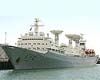
China plans to cap foreign holdings in the country's ship makers at 49 percent as the government moves to both maintain control over the fledgling industry and tap overseas know how. |
|
|

| The content herein, unless otherwise known to be public domain, are Copyright 1995-2006 - SpaceDaily.AFP and UPI Wire Stories are copyright Agence France-Presse and United Press International. ESA PortalReports are copyright European Space Agency. All NASA sourced material is public domain. Additionalcopyrights may apply in whole or part to other bona fide parties. Advertising does not imply endorsement,agreement or approval of any opinions, statements or information provided by SpaceDaily on any Web page published or hosted by SpaceDaily. Privacy Statement |