|
 |
 |
 |
 |
 |
 |
 |
 |

 |
Huygens Team Calibrates Science and Mission Plans
Paris - Oct 29, 2003 The Cassini/Huygens spacecraft is performing nominally. A successful in-flight engineering demonstration of the first orbiter critical sequence, Saturn Orbit Insertion (SOI), was successfully carried out in August. Orbiter fault protection modes were set as they will be set during the real SOI sequence on 1 st July 2004. Similarly, an in-flight engineering demonstration of the Probe Relay Sequence, the 2 nd orbiter critical sequence, is planned on 29 th February-4 March 2004. All orbiter functions that are needed to support the Probe Relay Sequence will be exercised. In addition, the JPL and the ESOC ground segments will also be exercised.
Revised Huygens mission implementation: status report The fifth Huygens ESA/JPL Quarterly Meting took place on 24-26 September. A number of technical issues regarding the Huygens mission were discussed. The most important outcome of the meeting was the decision to baseline the pre-heating option. The purpose of pre-heating is to warm the data system circuitry to further reduce the Doppler effect which has troubled the link performance. Pre-heating is accomplished by anticipating the Probe power ON by 4 hours prior to entry at Titan. All analyses show that there are sufficient power reserves and that the mission is completely robust to this option. No mission single point failure was introduced by the pre-heating configuration. The Delta Flight Acceptance Review is being planned to start in early December. The in-flight implementation and validation of the pre-heating software patches will be carried out on 7-17 December. A careful approach is being implemented to allow full verification of the proper loading of the instrument patches before activating the probe payload. For this reason, the test is carried out over several DSN passes with ground interactivity from JPL, ESOC/HPOC and the PI-institutes.
Science results They agree with the prediction of standard general relativity with a sensitivity that approaches the level at which, theoretically, deviations are expected in some cosmological models. Of great relevance to what Huygens might encounter at landing, recent Earth-based measurements (using upgraded Arecibo and Green-Bank radio telescopes), found echoes consistent with liquid surfaces in 12 out of 16 radar looks. A highly successful balloon flight was conducted from the ASI balloon base in Trapani, Sicily on 6 June. A full-scale Huygens Probe mock-up was dropped from 33 km altitude and descended under parachute for a safe landing about 40 min later. The mock-up was instrumented with the full HASI instrument and additional sensors including the Huygens radar altimeter and probe system accelerometers. The data set is being used to characterise the HASI instrument in the Probe aerodynamic environment and prepare for the data analysis of the real mission data set at Titan. It also provided an excellent data set for testing the tools being prepared by several Huygens science teams to reconstruct the Huygens descent trajectory and probe attitude. Community Email This Article Comment On This Article Related Links Huygens at ESA SpaceDaily Search SpaceDaily Subscribe To SpaceDaily Express Explore The Ring World of Saturn and her moons Jupiter and its Moons The million outer planets of a star called Sol News Flash at Mercury
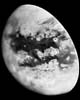
 Naming New Lands - September Flyby, No Labels
 Pasadena CA (JPL) Nov 07, 2005
Like an ancient mariner charting the coastline of an unexplored wilderness, Cassini's repeated encounters with Titan are turning a mysterious world into a more familiar place. |
|
|

| The content herein, unless otherwise known to be public domain, are Copyright 1995-2006 - SpaceDaily.AFP and UPI Wire Stories are copyright Agence France-Presse and United Press International. ESA PortalReports are copyright European Space Agency. All NASA sourced material is public domain. Additionalcopyrights may apply in whole or part to other bona fide parties. Advertising does not imply endorsement,agreement or approval of any opinions, statements or information provided by SpaceDaily on any Web page published or hosted by SpaceDaily. Privacy Statement |