
 |
 |
 |
 |
 |
 |
 |
 |
 |

 |
Hurricanes And Climate Change: A Sharper View
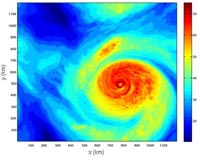
Virginia Key FL (SPX) Aug 14, 2008 In a study published in the July 2008 issue of Geophysical Research Letters, Drs. David S. Nolan and Eric D. Rappin from the University of Miami's Rosenstiel School of Marine and Atmospheric Science describe a new method for evaluating the frequency of hurricane formation in present and future tropical climates. While current thinking about changes in hurricane frequency comes mostly from computer simulations of global climate, the computer models used for these studies can only represent the coarsest features of hurricanes, thus casting doubt in their predictions of hurricane activity. The new approach by Nolan and Rappin, developed in collaboration with Dr. Kerry Emanuel of the Massachusetts Institute of Technology, uses computer models with much more accurate representation of the processes that lead to hurricane formation, much the same way a digital image with more pixels allows for a more detailed photographic image. The models are used to simulate the rate of hurricane development in tropical atmospheres with varying values of sea surface temperature and vertical wind shear (which is the extent to which wind speed and direction changes with height in the atmosphere). These two variables - ocean temperature and wind shear -- are considered to be the two most important factors in predicting hurricane activity, both in operational forecasting and in consideration of climate change. "We designed the computer simulations to show that as the ocean temperature increased, hurricanes would form more rapidly and easily, even in the presence of wind shear," says Nolan, associate professor of Meteorology at the Rosenstiel School. "Instead, we got exactly the opposite result. As the water temperature increased, the effectiveness of the wind shear in suppressing hurricane formation actually became greater." The simulations show that if they do form, hurricanes become stronger in the warmer environments. Together, these results suggest that in a global warming world, there would be less hurricanes, but those that do form could become stronger. The same prediction has recently been made by other studies using global climate models, and the similarity of the two predictions enhances confidence in the results. "The additional aspect that our method offers is a much more accurate picture of the process of tropical storm and hurricane formation, as compared to the global models," Nolan said. "Our ongoing work with this model and others should lead to a much better understanding of the relationship between climate and global hurricane activity." Community Email This Article Comment On This Article Share This Article With Planet Earth
Related Links University of Miami Rosenstiel School of Marine and Atmospheric Science Bringing Order To A World Of Disasters When the Earth Quakes A world of storm and tempest
 US experts predict more active hurricane season
 Miami (AFP) Aug 5, 2008
US weather experts raised their predictions for this year's Atlantic hurricane season on Tuesday, warning that warmer waters could whip up 17 tropical storms including nine that will grow into hurricanes. |
|
|

| The content herein, unless otherwise known to be public domain, are Copyright 1995-2007 - SpaceDaily.AFP and UPI Wire Stories are copyright Agence France-Presse and United Press International. ESA Portal Reports are copyright European Space Agency. All NASA sourced material is public domain. Additional copyrights may apply in whole or part to other bona fide parties. Advertising does not imply endorsement,agreement or approval of any opinions, statements or information provided by SpaceDaily on any Web page published or hosted by SpaceDaily. Privacy Statement |
 del.icio.us
 Digg
Digg Reddit
 YahooMyWeb
 Google
 Facebook