|
 |
 |
 |
 |
 |
 |
 |
 |

 |
Hughes Led Team Wins MilSat Definition Conctract
El Segundo - August 25, 1999 - A team led by Hughes Space and Communications Company (HSC) has received one of two contracts for the system definition phase for the next generation of highly protected U.S. defense communications satellites, called the Advanced EHF System. Advanced EHF is the follow-on to the current Milstar satellite communications system, and is scheduled for its first launch in 2006. Like Milstar, it will operate in the Extremely High Frequency band. Under the 18-month, $22 million firm fixed-price Advanced EHF contract, the team will define an end-to-end system for highly protected military satellite communications. The effort involves development of system requirements, architecture and design concepts. The contract was awarded this week through the Space and Missile Center at Los Angeles Air Force Base. After the completion of this phase, one of the two teams may be awarded the production contract for five satellites and modifications to control centers. That contract, called the Engineering, Manufacturing, Development and Production phase, will be awarded in 2001. On the HSC team are Raytheon Company, Marlborough, Mass.; Logicon, a Northrop Grumman company based in Herndon, Va.; Science Applications International Corp. (SAIC), San Diego; and Integrated Information Technology Corp. (IITC) of Colorado Springs, Colo. The team members were selected based on their extensive experience on the Milstar program as well as other Defense Department and commercial satellite communications programs. (more) Advanced EHF 2-2-2 "We have assembled a proven world-class team experienced in both military and commercial communications," said Tig H. Krekel, HSC President and CEO. "Together we have decades of expertise in satellite and ground system hardware and software. Collectively we are the leaders in satellite system engineering and large-scale program management. Thus, we can offer the DoD a high-value and low-risk system." The Advanced EHF system will be the DoD's primary system for highly protected satellite communications through 2020. It will provide data rates five times faster than Milstar. In addition, the system will be compatible with existing Milstar ground terminals, and provide a seamless connection with the Milstar satellite crosslinks. HSC and Raytheon, along with Applied Signal Technology, Inc., are also part of a team developing an engineering model of the Advanced EHF digital signal processor. This three-year contract was awarded in May 1997. The processor is the core of the satellite payload, receiving signals, routing them and preparing them for transmission back to Earth. Hughes supplies the Milstar medium-data-rate and crosslink payloads, and elements of the low-data-rate payload. Raytheon is the leading provider of Milstar ground terminals. Logicon and SAIC provide much of the software and sustainment support for the Milstar system. IITC provides Milstar communications management and operations support. HSC is the world's leading manufacturer of commercial communications satellites, having built nearly 40 percent of those in operation. It also is a major supplier of spacecraft and equipment to the U.S. government, and a builder of weather satellites for the U.S. and Japan. Raytheon Company, based in Lexington, Mass., is a global technology leader that provides products and services in the areas of commercial and defense electronics, engineering and construction, and business and special mission aircraft. Raytheon has operations throughout the United States and serves customers in more than 80 countries. Logicon Inc., headquartered in Herndon, Va., is a subsidiary of Northrop Grumman Corporation, and a leader in advanced information technologies, systems and services. Areas of expertise include command, control, communications, computers, intelligence, surveillance and reconnaissance (C4ISR); weapon systems; information systems; training and simulation; science and technology; base and range support; and system support services. SAIC is the nation's largest employee-owned research and engineering company, providing information technology and systems integration products and services to government and commercial customers. SAIC scientists and engineers work to solve complex technical problems in telecommunications, national security, health care, transportation, energy, the environment, and financial services. With annual revenues of $4.7 billion, SAIC and its subsidiaries, including Telcordia Technologies (formerly Bellcore), have more than 38,000 employees at offices in more than 150 cities worldwide. IITC was founded in 1991 with a focus on information technology, including military satellite communications (MILSATCOM). MILSATCOM and the Milstar program in particular have been an integral part of the company's growth. IITC is the developer of many crucial Milstar documents including the Transition Plan; Network Implementation Plan; Network Cutover Plan, Strategic JCS Network Operating Instructions; and the Automated Communications Management System (ACMS) Concepts of Use and User Implementation Plan. Additionally, IITC has conducted the Independent Verification and Validation of all Milstar communications tools including ACMS.
Email This Article Comment On This Article Related Links Space
 Satellite Launch To Boost DTH In India
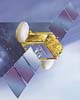 Calcutta, India (SPX) Dec 28, 2005
The successful launch Thursday of India's heaviest satellite from spaceport of Kourou in French Guyana may have boosted the country's space research efforts to yet another level, but it has also lifted the spirits of at least three Direct-To-Home televisions broadcasters, one of which has been waiting for years to launch its services in India. |
|
|

|
|
|
|
|
|
|
|
|
|
|
|
| The content herein, unless otherwise known to be public domain, are Copyright 1995-2006 - SpaceDaily.AFP and UPI Wire Stories are copyright Agence France-Presse and United Press International. ESA PortalReports are copyright European Space Agency. All NASA sourced material is public domain. Additionalcopyrights may apply in whole or part to other bona fide parties. Advertising does not imply endorsement,agreement or approval of any opinions, statements or information provided by SpaceDaily on any Web page published or hosted by SpaceDaily. Privacy Statement |