
 |
 |
 |
 |
 |
 |
 |
 |
 |

 |
Hubble Space Telescope Passes 100 000 Orbits On August 11
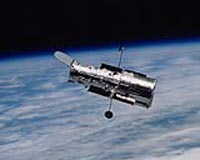
Pasadena CA (SPX) Aug 05, 2008 The odometer on NASA's Hubble Space Telescope is about to turn over 100,000. That's not 100,000 miles but the number of orbits it has made around Earth since it was launched aboard the space shuttle Discovery on April 24, 1990. To remain in orbit the spacecraft zooms along at nearly five miles per second. So Hubble's actual odometer mileage is approximately 2.72 billion miles, the equivalent of 5,700 round trips to the Moon. It's also the number of miles Americans will drive today in less than 3 hours. That's not bad considering Hubble doesn't use fuel of any kind, only Earth's gravity to maintain it in a circular orbit. Although Hubble doesn't require fuel, it is similar to cars and other vehicles in that it does have wear and tear, and needs servicing and upgrading from time to time. It's dinged by micrometeorite impacts, and sunlight and temperature extremes degrade its silvery thermal insulating material. The telescope will get another tune-up in October when astronauts aboard the space shuttle Atlantis make one final mechanic's check to replace worn components and install spanking new instruments to extend Hubble's vision. Hubble's odometer turns over at 7:42 a.m. EDT on August 11. At that time Hubble will be moving northward as it crosses the intersection point where its orbit passes directly over Earth's equator. Community Email This Article Comment On This Article Share This Article With Planet Earth
Related Links Hubble Space Telescope News and Technology at Skynightly.com
 Hubble Finds Large Sample Of Very Distant Galaxies
 Washington DC (SPX) Jul 28, 2008
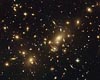
New Hubble Space Telescope observations of six spectacular galaxy clusters acting as gravitational lenses have given significant insights into the early stages of the Universe. Scientists have found the largest sample of very distant galaxies seen to date: ten promising candidates thought to lie at a distance of 13 billion light-years (about redshift 7.5). |
|
|

| The content herein, unless otherwise known to be public domain, are Copyright 1995-2007 - SpaceDaily.AFP and UPI Wire Stories are copyright Agence France-Presse and United Press International. ESA Portal Reports are copyright European Space Agency. All NASA sourced material is public domain. Additional copyrights may apply in whole or part to other bona fide parties. Advertising does not imply endorsement,agreement or approval of any opinions, statements or information provided by SpaceDaily on any Web page published or hosted by SpaceDaily. Privacy Statement |
 del.icio.us
 Digg
Digg Reddit
 YahooMyWeb
 Google
 Facebook