|
 |
 |
 |
 |
 |
 |
 |
 |

 |
How Arthropods Survive The Cold Using Natural Anti-Freeze
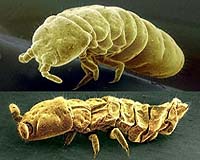
Glasgow, UK (SPX) Apr 03, 2007 Given the choice, many of us would opt for warmer climes during the bleak midwinter. However, most of us cannot afford to move abroad for a few months, so instead we pile on extra layers of clothing to keep warm. Arthropods face much the same dilemma, as they cannot migrate long distances to avoid low winter temperatures - so why are they not killed off by the cold? Dr Melody Clark, from the British Antarctic Survey, will present data on the fascinating ways two species of these animals combat the cold on Tuesday 3rd April at the Society for Experimental Biology's Annual Meeting in Glasgow. Onychiurus arcticus (from the Arctic) uses protective dehydration to survive harsh Arctic winters. This means that water is lost from the body across a diffusion gradient between the animals' super-cooled body fluids and ice in the surroundings. "During this process the body loses all its water and you end up with a normal looking head, and a body which looks like a crumpled up crisp packet when it is fully dehydrated. But add a drop of water and it all goes back to normal!" explains Dr Clark. Scientists examined the different stages of this process to see which genes were activated. Cryptopygus antarcticus lives in the Antarctic and uses a different mechanism to survive cold temperatures. These creatures accumulate anti-freeze compounds which lower the temperature at which their bodies freeze, meaning they can withstand temperatures as low as minus 30C. Within this population there is a clear divide into less- and more-cold hardened animals, which has been a puzzle to researchers. However, by looking for differences in gene expression levels between the two populations, scientists think that there could be a link to moulting (this is the process by which arthropods shed their exoskelton). Community Email This Article Comment On This Article Related Links Society for Experimental Biology Darwin Today At TerraDaily.com Darwin Today At TerraDaily.com
 Researchers Help Find Master Switch In Plant Communication
 Los Angeles CA (SPX) Apr 03, 2007
Scientists have puzzled for years in understanding how plants pass signals of stress, due to lack of water or salinity, from chloroplast to nuclei. They know that chloroplasts -- the cellular organelles that give plants their green color -- have at least three different signals that can indicate a plant is under stress. |
|
|

| The content herein, unless otherwise known to be public domain, are Copyright 1995-2006 - SpaceDaily.AFP and UPI Wire Stories are copyright Agence France-Presse and United Press International. ESA PortalReports are copyright European Space Agency. All NASA sourced material is public domain. Additionalcopyrights may apply in whole or part to other bona fide parties. Advertising does not imply endorsement,agreement or approval of any opinions, statements or information provided by SpaceDaily on any Web page published or hosted by SpaceDaily. Privacy Statement |