
 |
 |
 |
 |
 |
 |
 |
 |
 |

 |
How Are Herbicides Discovered
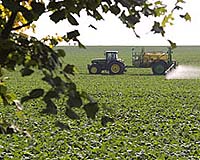
Madison WI (SPX) Sep 11, 2008 A new interactive web lesson teaches upper-level undergraduate students and graduate students how herbicides are developed. The lesson, developed by William E. Dyer, Montana State University, has the seal of approval by the Journal of Natural Resources and Life Sciences Education and is published in the 2008 issue. Surprisingly, almost all of the herbicides on the market today were discovered by random searching. Collections of chemicals from companies that make dyes, plastics, or other industrial compounds were simply sprayed on plants, and the ones that killed the weeds were developed into commercial products. This process seems quite inefficient, but it has worked rather well until recently. Now, companies are trying to create "designer herbicides" that will stop a specific pathway inside a weed. The explosion of new biotech information about DNA sequences and protein functions may allow this new method to produce weed killers that are effective and yet safe for our environment. "I predict that the recent revolution in biotechnology information will significantly improve the way we create pesticides, medicines, and other chemicals," says author William Dyer. After completing the lesson students will be able to: describe the history of herbicide discovery and development, describe newer techniques currently used to discover and screen herbicides, and understand the advantages and disadvantages of the currently used method. Development of the lesson was supported in part by the Montana Agricultural Experiment Station, Montana State University, and the Western Society of Weed Science. Community Email This Article Comment On This Article Share This Article With Planet Earth
Related Links American Society of Agronomy (ASA) Farming Today - Suppliers and Technology
 EU clears imports of GM soybean strain
 Brussels (AFP) Sept 8, 2008
The European Commission authorised Monday the import of a genetically modified strain of soybean for use in feed and food for 10 years. |
|
|

| The content herein, unless otherwise known to be public domain, are Copyright 1995-2007 - SpaceDaily.AFP and UPI Wire Stories are copyright Agence France-Presse and United Press International. ESA Portal Reports are copyright European Space Agency. All NASA sourced material is public domain. Additional copyrights may apply in whole or part to other bona fide parties. Advertising does not imply endorsement,agreement or approval of any opinions, statements or information provided by SpaceDaily on any Web page published or hosted by SpaceDaily. Privacy Statement |
 del.icio.us
 Digg
Digg Reddit
 YahooMyWeb
 Google
 Facebook