|
 |
 |
 |
 |
 |
 |
 |
 |

 |
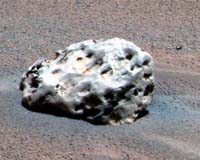
Hovering Near Heat Shield And A Holey Rock
Pasadena CA (JPL) Jan 17, 2005 Opportunity is healthy. It acquired microscopic images of the fractured edge of the heat-shield wreckage and began a detailed investigation of an intriguing, pitted rock a few meters to the north, called "Heat Shield Rock." The team continues to closely monitor orbital images for dust storms. The opacity of the atmosphere above Opportunity has averaged 0.75 with a slight downward (clearing) trend over the past week.
Sol-by-sol summaries Sols 341 through 343 were combined in a three-sol plan for the Earth weekend. On sol 341, Opportunity used a morning Mars Odyssey pass for a communications relay at about 4 a.m. local solar time and then slept until solar-array wakeup at about 8:45 a.m. After another short nap, the rover did a bit of remote sensing and received its new commands for the sol. Opportunity deployed its robotic arm and acquired 96 microscopic images of the fractured edge of the heat shield. In the afternoon it used its Moessbauer spectrometer to analyze dust on the science filter magnet. It used the deep-sleep mode overnight. On sol 342, Opportunity woke from deep sleep at about 7 a.m. local solar time and restarted the Moessbauer integration on the magnet. It was a light day of activity with afternoon remote sensing, an evening Odyssey relay pass, and then deep-sleeping overnight. On sol 343, the rover restarted Moessbauer integration on the magnet and completed afternoon remote sensing before deep-sleeping. On sol 344, Opportunity stowed its instrument deployment device (robotic arm) and backed up about 4 meters (13 feet) before acquiring a panorama of the heat shield and other remote sensing. The rover did not deep-sleep overnight in order utilize the morning Odyssey relay and return as much data as possible. The flash memory is relatively full. On sol 345, Opportunity acquired additional navigation-camera images of the heat shield to support a future re-approach for additional microscopic imaging. It then turned and drove north toward "Heat Shield Rock," which has pits in its surface. The rover traversed about 10 meters (33 feet) and arrived at the desired 1-meter (about 3.3 feet) standoff distance to acquire remote sensing of the rock. Opportunity used the energy-conserving deep-sleep mode overnight. Sol 346 - Opportunity acquired additional remote sensing and then bumped forward, putting the rock within the work volume of the tools on the instrument deployment device. The rover took advantage of an early-morning communications pass, so it did not deep-sleep overnight. Community Email This Article Comment On This Article Related Links Mars Rovers at JPL Mars Rovers at Cornell SpaceDaily Search SpaceDaily Subscribe To SpaceDaily Express Mars News and Information at MarsDaily.com Lunar Dreams and more
 Spirit Heading To 'Home Plate'
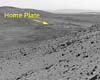 Pasadena CA (JPL) Jan 09, 2006
Last week Spirit completed robotic-arm work on "El Dorado." The rover used all three of its spectrometers plus the microscopic imager for readings over the New Year's weekend. |
|
|

| The content herein, unless otherwise known to be public domain, are Copyright 1995-2006 - SpaceDaily.AFP and UPI Wire Stories are copyright Agence France-Presse and United Press International. ESA PortalReports are copyright European Space Agency. All NASA sourced material is public domain. Additionalcopyrights may apply in whole or part to other bona fide parties. Advertising does not imply endorsement,agreement or approval of any opinions, statements or information provided by SpaceDaily on any Web page published or hosted by SpaceDaily. Privacy Statement |