
 |
 |
 |
 |
 |
 |
 |
 |
 |

 |
High-Tech Heart Of New Radio Telescope Passes First Test
Socorro NM (SPX) Aug 13, 2008 The Expanded Very Large Array (EVLA), part of the National Radio Astronomy Observatory (NRAO), took a giant step toward completion on August 7 with successful testing of advanced digital hardware designed to combine signals from its upgraded radio-telescope antennas to produce high resolution images of celestial objects. By upgrading the 1970s-era electronics of its original Very Large Array (VLA), NRAO is creating a major new radio telescope that is ten times more sensitive than before. Using the EVLA, astronomers will observe fainter and more-distant objects than previously possible and use vastly improved analysis tools to decipher their physics. The heart of the new electronics that makes this transformation possible is a high-performance, special-purpose supercomputer, called the WIDAR Correlator. It has been designed and is being built by the National Research Council of Canada at the Dominion Radio Astrophysical Observatory (DRAO) of the Herzberg Institute for Astrophysics, and serves as Canada's contribution to the EVLA project. The design of the correlator incorporates an NRC-patented new digital electronic architecture. The successful test, at the VLA site 50 miles west of Socorro, New Mexico, used prototype correlator electronics to combine the signals from two upgraded VLA antennas to turn them into a single, high-resolution telescope system, called an interferometer. The technical term for this achievement is called "first fringes." Each upgraded EVLA antenna produces 100 times more data than an original VLA antenna. When all 27 antennas are upgraded, they will pump data into the WIDAR correlator at a rate equal to 48 million digital telephone calls. To process this torrent of data, the correlator will make 10 million billion calculations per second. Powerful, multi-antenna imaging radio-telescope systems use pairs of antennas as their basic building blocks. Each of the VLA's 27 giant dish antennas is combined electronically with every other antenna to form a multitude of pairs. Each pair contributes unique information that is used to build a highly-detailed image of some astronomical object. The successful two-antenna test thus verifies the design of the new correlator. "This achievement marks the first time that the complete chain of electronics for the EVLA has worked together, and represents a huge milestone in the project. Our congratulations go to our Canadian colleagues and to the NRAO staff members participating in this project. This is a job well done," said Fred Lo, Director of the National Radio Astronomy Observatory. The VLA Expansion, a ten-year project approved in 2001, is funded by $55 million from the United States National Science Foundation (NSF) and $1.75 million from the Mexican government. The Canadian correlator represents a contribution of about $17 million to the project. Throughout the project, the VLA has continued to operate, using a mix of the old and new-style antennas to provide an ongoing research tool. Over its lifetime, the VLA has been the most scientifically-productive ground-based telescope in the history of astronomy. When completed in 2012, the EVLA will be the most powerful centimeter-wavelength radio telescope in the world. The technology developed for the EVLA will enable progress on the next generation radio telescope called the Square Kilometer Array (SKA). The National Radio Astronomy Observatory is a facility of the National Science Foundation, operated under cooperative agreement by Associated Universities, Inc. Community Email This Article Comment On This Article Share This Article With Planet Earth
Related Links National Radio Astronomy Observatory (NRAO) Space Telescope News and Technology at Skynightly.com
 MIT Instruments Featured As Highlight Of NASA's 50 Years
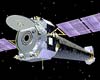 Boston MA (SPX) Aug 04, 2008
The orbiting Chandra Observatory, one of NASA's series of Great Observatories, was featured this week in a collection of highlights from NASA's first five decades that was displayed on Nature magazine's web site. |
|
|

| The content herein, unless otherwise known to be public domain, are Copyright 1995-2007 - SpaceDaily.AFP and UPI Wire Stories are copyright Agence France-Presse and United Press International. ESA Portal Reports are copyright European Space Agency. All NASA sourced material is public domain. Additional copyrights may apply in whole or part to other bona fide parties. Advertising does not imply endorsement,agreement or approval of any opinions, statements or information provided by SpaceDaily on any Web page published or hosted by SpaceDaily. Privacy Statement |
 del.icio.us
 Digg
Digg Reddit
 YahooMyWeb
 Google
 Facebook