|
 |
 |
 |
 |
 |
 |
 |
 |

 |
High School Students Discover Kuiper 72
Washington - November 21, 1998 - High school students have discovered a previously unidentified celestial object in the Kuiper Belt using images from the National Science Foundation's (NSF) 4-meter Blanco Telescope in Chile. Heather McCurdy, Miriam Gustafson and George Peterson of Northfield Mount Hermon School in Northfield, Massachusetts, one of six Asteroid Search Teams at the school participating in NSF's innovative Hands-On universe Program, found and verified the distant object. It was approximately 100 miles in diameter and now is officially called 1998 FS144. Astronomy teacher Hughes Pack directed the students' search of computer images provided by the Berkeley National Lab's Supernova Cosmology Program. A collaborating team, Stacey Hinds and Angel Birchard, students from Pennsylvania's Oil City Area High School, confirmed the location of 1998 FS144 for their peers at Northfield Mount Hermon. The Oil City students were led by teacher Tim Spuck, a 1998 Pennsylvania Christa McAuliffe Fellow. How significant is the find? "Only about 72 such objects had been identified in the Kuiper Belt," says Pack. Kuiper Belt Objects, found beyond Neptune, are generally believed to be remnants dating to the formation of our solar system. "This is a fantastic piece of science, of education, of discovery," said Hands-On universe founder and astrophysicist Carl Pennypacker of Lawrence Berkeley National Lab and The Lawrence Hall of Science. He added, "The Northfield students' discovery has shown that all students from a broad range of backgrounds can make solid, exciting and inspiring scientific contributions." "These students had the opportunity to operate like real astronomers," said NSF program officer Joseph Stewart. Star images were obtained by the students via computer from Cerro Tololo Inter-American Observatory in Chile, Stewart said. Students then used visual inspection and special Hands-On universe software. "One of the historically limiting factors in astronomy has been simply not having enough eyes available to inspect all the useful images that astronomers collect," he said, "but, it's very exciting that these kids are contributing to real science, performing actual science in the classroom!" They are able to measure the distance of stars and track supernova, for example. "This generous sharing of data by the Supernova Cosmology Program scientists," said Pack, "is serving dual purposes, because scientists at the Supernova Cosmology Group are using the data to find supernova while students use the same data to search for very faint asteroids." "The Kuiper Belt has the potential to tell us a great deal about how the solar system originated and evolved and how it compares to others," says Brian Marsden of the Minor Planet Center in Cambridge, Massachusetts. Marsden received the data from Pack and confirmed the discovery. Begun in 1990, Hands-On universe is now based at the University of California-Berkeley in the Lawrence Hall of Science. Cerro Tololo Inter- American Observatory is one of four divisions of the National Optical Astronomy Observatories (NOAO), operated by the Association of Universities for Research in Astronomy (AURA), Inc., under cooperative agreement with NSF.
Asteroid and Other Debris at Spacer.Com
Email This Article Comment On This Article Related Links Space
 Satellite Launch To Boost DTH In India
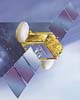 Calcutta, India (SPX) Dec 28, 2005
The successful launch Thursday of India's heaviest satellite from spaceport of Kourou in French Guyana may have boosted the country's space research efforts to yet another level, but it has also lifted the spirits of at least three Direct-To-Home televisions broadcasters, one of which has been waiting for years to launch its services in India.
--------------------------------------------------------- It's new. And it's downright terrific! Celestron's CPC Schmidt-Cassegrain telescope is the scope you've been waiting for! It offers new alignment technology, advanced engineering, and bold new design at a new, low price! In fact, Celestron's Professional Computerized (CPC) scope with revolutionary SkyAlign Alignment Technology redefines everything that amateur astronomers are looking for. It offers quick and simple alignment, GPS technology, unsurpassed optical quality, ease of use, advanced ergonomics, enhanced computerization and, most important, affordability. Want to view M-31 tonight? One button takes you there!
Shop for telescopes online at Telescopes.com! today!
|
|
|

|
|
|
|
|
|
|
|
|
|
|
|
| The content herein, unless otherwise known to be public domain, are Copyright 1995-2006 - SpaceDaily.AFP and UPI Wire Stories are copyright Agence France-Presse and United Press International. ESA PortalReports are copyright European Space Agency. All NASA sourced material is public domain. Additionalcopyrights may apply in whole or part to other bona fide parties. Advertising does not imply endorsement,agreement or approval of any opinions, statements or information provided by SpaceDaily on any Web page published or hosted by SpaceDaily. Privacy Statement |