|
 |
 |
 |
 |
 |
 |
 |
 |

 |
Hebrew University Researchers Uncover Eight Previously Unknown Species
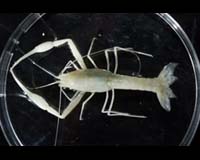
In cave near Ramle (SPX) Jun 02, 2006 Discovery of eight previously unknown, ancient animal species within "a new and unique underground ecosystem" in Israel was revealed today by Hebrew University of Jerusalem researchers. In a press conference on the Mt. Scopus campus of the Hebrew University, the researchers said the discovery came about when a small opening was found, leading to a cave extending to a depth of 100 meters beneath the surface of a quarry in the vicinity of Ramle, between Jerusalem and Tel Aviv. The quarry is operated by cement manufacturer Nesher Industries. The cave, which has been dubbed the Ayalon Cave, is "unique in the world," said Prof. Amos Frumkin of the Hebrew University Department of Geography. This is due mainly to its isolation from the outside world, since the cave's surface is situated under a layer of chalk that is impenetrable to water. The cave, with its branches, extends over some 2� kilometers, making it Israel's second largest limestone cave. It is to remain closed to the public to permit further scientific research. The invertebrate animals found in the cave � four seawater and freshwater crustaceans and four terrestial species � are related to but different from other, similar life forms known to scientists. The species have been sent to biological experts in both Israel and abroad for further analysis and dating. It is estimated that these species are millions of years old. Also found in the cave were bacteria that serve as the basic food source in the ecosystem. "The eight species found thus far are only the beginning" of what promises to be "a fantastic biodiversity," said Dr. Hanan Dimentman of the Hebrew University Alexander Silberman Institute of Life Sciences, another of the researchers involved in the project. He said that he expects further exploration to reveal several other unique life forms. The animals found there were all discovered live, except for a blind species of scorpion, although Dr. Dimentman is certain that live scorpions will be discovered in further explorations and also probably an animal or animals which feed on the scorpions. The underground cave includes an underground lake, in which the crustaceans were found. The lake is part of the Yarkon-Taninim aquifer, one of Israel's two aquifers, yet is different in temperature and chemical composition from the main waters of the aquifer. The lake's temperature and salinity indicates that its source is deep underground. Among the interesting features of the discoveries thus far in the cave is that two of the crustaceans are seawater species and two others are of a types found in fresh or brackish water. This can provide insights into events occurring millions of years ago regarding the history of ancient bodies of water in the region. Community Email This Article Comment On This Article Related Links Hebrew University Darwin Today At TerraDaily.com
 It Takes Energy To Make A Species
 Gainesville FL (SPX) Jun 02, 2006
Comfortable living is not why so many different life forms seem to converge at the warmer areas of the planet. Writing this week in the Proceedings of the National Academy of Sciences, scientists say higher temperatures near the equator speed up the metabolisms of the inhabitants, fueling genetic changes that actually lead to the creation of new species. |
|
|

| The content herein, unless otherwise known to be public domain, are Copyright 1995-2006 - SpaceDaily.AFP and UPI Wire Stories are copyright Agence France-Presse and United Press International. ESA PortalReports are copyright European Space Agency. All NASA sourced material is public domain. Additionalcopyrights may apply in whole or part to other bona fide parties. Advertising does not imply endorsement,agreement or approval of any opinions, statements or information provided by SpaceDaily on any Web page published or hosted by SpaceDaily. Privacy Statement |