|
 |
 |
 |
 |
 |
 |
 |
 |

 |
Heavy Rainfall On The Increase
Norwich, UK (SPX) Feb 15, 2008 Scientists at the University of East Anglia (UEA) have found that winter precipitation - such as rain and snow - became more intense in the UK during the last 100 years. Similar increases in heavy rainfall have now also become evident in spring and, to a lesser extent, autumn. A previously reported reduction in heavy summer rainfall appears to have ended during the 1990s, with observations for the last decade indicating a return to more typical amounts of intense rainfall in summer. The results will inform other work currently being carried out on flood risk and the impact of extreme weather events. As surface run-off depends on rainfall intensity and frequency, changes in intense rainfall events will impact strongly on floods. The UEA study was funded by the Natural Environment Research Council (NERC) as part of the Flood Risk from Extreme Events (FREE) programme, which aims to improve predictions of floods minutes-to-weeks and seasons-to-decades ahead, by using environmental science to investigate the physical processes involved in generating extreme flooding events. Using data from more than 600 rain gauges around the UK, from as far back as 1900 to as recently as 2006, Douglas Maraun, Tim Osborn and Nathan Gillett, of the university's Climatic Research Unit, classified every day's measured precipitation into one of 10 categories of rainfall intensity, from drizzle to a downpour. They then analysed how the amount of precipitation in each category has changed over time. In winter, for example, the amount of precipitation falling in the heaviest category has increased over the last 40 years in all regions of the UK. The work, published this week in the International Journal of Climatology, updates and extends previous studies by Dr Osborn and colleagues, using five-times as many rain gauges and looking at measurements over a longer time period. Their classification took into account the typical differences in rainfall between summer and winter and across different regions of the country. In parts of East Anglia, for example, heavy rain meant at least 20mm falling on a single summer day, while in winter, 10mm in a day was sufficient to reach the heaviest category. For some locations in the north-west Highlands of Scotland, rain or snow falls of at least 30mm in summer and even 60mm in winter were the minimum required to count towards the heaviest category. This new, more extensive study, using up-to-date records, supports the existence of a long-term increase in winter precipitation intensity that is very widespread across the UK. In the late 1960s, about seven per cent of the UK's winter precipitation came from heavy rain or snow events, while in the last 10 years that figure has been about 12 per cent. Until the late 1990s, most areas of the UK had seen a decreasing contribution of extreme rainfall during the summer. The updated measurements indicate that this trend towards lighter summer rainfall reversed during the last decade, but it is too early to tell whether this new trend will continue into the future. "So far it is not clear what causes these trends and variations. In the next stage of our study, we will be looking at possible physical mechanisms and whether man-made global warming is contributing," explained Dr Maraun. Community Email This Article Comment On This Article Related Links University of East Anglia (UEA) Weather News at TerraDaily.com
 'Greatest ever' downpour floods Tonga: officials
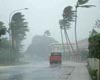 Nuku'Alofa (AFP) Feb 9, 2008
A freak storm -- that dumped more than a month's average rainfall in less than 24 hours -- has swamped the Pacific island nation of Tonga, forcing evacuations, officials said Saturday. |
|
|

| The content herein, unless otherwise known to be public domain, are Copyright 1995-2007 - SpaceDaily.AFP and UPI Wire Stories are copyright Agence France-Presse and United Press International. ESA Portal Reports are copyright European Space Agency. All NASA sourced material is public domain. Additional copyrights may apply in whole or part to other bona fide parties. Advertising does not imply endorsement,agreement or approval of any opinions, statements or information provided by SpaceDaily on any Web page published or hosted by SpaceDaily. Privacy Statement |