|
 |
 |
 |
 |
 |
 |
 |
 |

 |
Heart Of Herschel To Be Presented To Media
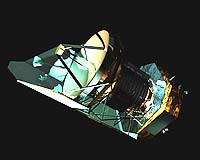
Paris, France (SPX) Sep 05, 2007 By the end of 2007, the assembly of the ESA's Herschel far-infrared space observatory - the latest mission to study the formation and evolution of stars and galaxies - will be completed. ESA and Astrium are jointly inviting the media to a press conference in Friedrichshafen, Germany, on 19 September 2007, to hear about this revolutionary spacecraft, its scientific objectives, and to view the very heart of its hardware. The Herschel mission, equipped with the largest telescope ever launched in space (3.5 m diameter), will give astronomers their best capability yet to explore the universe at far-infrared and sub-millimetre wavelengths. By measuring the light at these wavelengths, scientists see the 'cold' universe. Herschel will give them an unprecedented view, allowing them to see deep into star forming regions, galactic centres and planetary systems. In order to achieve its objectives and to be able to detect the faint radiation coming from the coolest objects in the cosmos, otherwise 'invisible', Herschel's detectors must operate at very low and stable temperatures. The spacecraft is equipped so as to cool them close to absolute zero (-273.15 C), ranging from -271 C to only a few tenths of a degree above absolute zero. To have achieved this particular feature alone is a remarkable accomplishment for European industry and science. The final integration of the various components of the Herschel spacecraft - payload module, cryostat, service module, telescope and solar arrays - will be completed in the next few months. This phase will be followed by a series of tests to get the spacecraft ready for launch at the end of July 2008. Herschel will be launched into space on an Ariane 5 ECA rocket. The launch is shared with Planck, ESA's mission to study relic radiation from the Big Bang. The Prime Contractor for the Herschel spacecraft is Thales Alenia Space (Cannes, France). It leads a consortium of industrial partners with Astrium (Germany) responsible for the Extended Payload Module (EPLM, including the Herschel cryostat), Astrium (France) responsible for the telescope, and the Thales Alenia Space industry branch of Torino, Italy, responsible for the Service Module (SVM). There is also a host of subcontractors spread throughout Europe. The three Herschel instruments were designed and built by consortia of scientists and institutes, with their own national funding. The Photodetector Array Camera and Spectrometer (PACS) was developed under the coordination of the MPE, Germany; the Spectral and Photometric Imaging Receiver (SPIRE) was developed under the coordination of the Cardiff University (United Kingdom); the Heterodyne Instrument for the Far Infrared (HIFI) was developed under the coordination of the SRON institute (The Netherlands). Community Email This Article Comment On This Article Related Links Herschel Planck overview Space Telescope News and Technology at Skynightly.com
 New NASA And NOAO Partnership To Open Doors Of Cosmic Discovery
 Tucson AZ (SPX) Sep 05, 2007
The National Optical Astronomy Observatory (NOAO) and NASA's upcoming Gamma-ray Large Area Space Telescope (GLAST) mission have forged a partnership designed to open the door for major discoveries. The GLAST-NOAO agreement will enable astronomers to propose for funding from GLAST to observe interesting objects in vastly different regions of the electromagnetic spectrum. |
|
|

| The content herein, unless otherwise known to be public domain, are Copyright 1995-2007 - SpaceDaily.AFP and UPI Wire Stories are copyright Agence France-Presse and United Press International. ESA Portal Reports are copyright European Space Agency. All NASA sourced material is public domain. Additional copyrights may apply in whole or part to other bona fide parties. Advertising does not imply endorsement,agreement or approval of any opinions, statements or information provided by SpaceDaily on any Web page published or hosted by SpaceDaily. Privacy Statement |