|
 |
 |
 |
 |
 |
 |
 |
 |

 |
Have Blood, Will Travel
Huntsville AL (SPX) Aug 23, 2004 In the time it takes you to read this sentence, more than 10 million red blood cells in your body will die. Don't be alarmed; it's natural, and stem cells in your bone marrow are constantly making enough new cells to replace the dying ones. But what if those blood-making cells stopped working? Without a fresh supply of red and white blood cells, you would quickly become anemic, your immune system would collapse, and without medical attention, you would die. This could be a concern for astronauts taking long trips beyond Earth orbit. It's well known that space radiation can damage cells in astronauts' bodies. Less well understood is the specific threat to the key blood-making cells. Understanding that threat, and developing remedies, is the job of Alan Gewirtz, a medical doctor at the University of Pennsylvania (Division of Hematology and Oncology). He's bombarding stem cells with simulated space radiation to see how the cells are affected. By exploring the molecular damage, and testing candidate drug-remedies, "this research could benefit not only astronauts, but also people here on Earth who suffer from blood disorders such as leukemia and aplastic anemia," says Gewirtz. The work is being done at the NASA Space Radiation Laboratory ("NSRL" for short) in New York. NSRL draws high-speed particles from one of the atom smashers at Brookhaven National Laboratory in Long Island and channels them to a special facility for biological research. The radiation consists of protons and heavy ions moving at almost light speed - much like the cosmic rays astronauts encounter in deep space. Apollo astronauts absorbed some cosmic rays on their way to the moon, but they didn't suffer much from it because those trips were short, a matter of days. Astronauts traveling to Mars, on the other hand, will be "out there" for at least six months. Accumulated cosmic ray damage could become important. To see how cosmic rays affect an astronaut's internal blood supply, Gewirtz irradiates Petri dishes containing samples of blood-making stem cells. Each sample contains about a million cells collected from the bloodstream of paid, healthy volunteers. Once the cells have been exposed, the team looks closely for damage. Are the cells' DNA strands (the "memory chips" for making new cells) affected? If so, how, and how badly? Are other parts of the cells' internal machinery damaged? In what ways? These stem cells should not be confused with controversial embryonic stem cells: Gewirtz is working with adult stem cells. Adult stem cells live in several places within every person's body, such as the bone marrow, the brain, the skin, and the gut. Unlike most of the body's cells, stem cells aren't pigeonholed into being only one kind of cell, such as a heart or a kidney cell; instead, they retain the ability to become any type of cell- a trait called "pluripotency" or "multipotency." Bone marrow stem cells, called "hematopoietic progenitor" cells, generate a continuous supply of cells that can become any of the following: platelets, lymphocytes and granulocytes (white blood cells), erythrocytes (red blood cells), and others. In this way, stem cells are a source of fresh replacement cells to fill in as older cells wear out. Beyond assessing radiation damage to hematopoietic progenitor cells, Gewirtz's group also plans to test some drug-like "countermeasures" that could help astronauts better endure low levels of radiation exposure. One idea is to give the cells antioxidants. Much of the damage to DNA isn't caused by the radiation itself, but by chemically reactive "free radicals" created when the radiation strikes some other molecule. These roving free radicals then go on to "oxidize", and thus damage, the DNA. Mopping up free radicals with antioxidants, in the form of pills, perhaps, could slow or halt the damage. Another approach they're considering is to amplify a natural system in people's cells for repairing DNA. Normally, cells contain dozens of specialized repair enzymes that constantly run up and down the long, stringy DNA molecules, checking for damage and making repairs. "We hope to find ways to stimulate the natural repair mechanisms," Gewirtz says. "It's hard to beat millions of years of evolution for picking out what works, and works well." Will these countermeasures help protect the cultured cell samples? Gewirtz says his team ought to have some results by the end of the year. If they're successful, astronauts on their way to Mars may not have to worry about their own internal wellsprings of new blood cells running dry. Community Email This Article Comment On This Article Related Links University of Pennsylvania NASA/BNL Space Radiation Program SpaceDaily Search SpaceDaily Subscribe To SpaceDaily Express Space Medicine Technology and Systems
 Genomic Sequences Processed In Minutes, Rather Than Weeks
 Richland WA (SPX) Jun 22, 2005
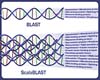
A new computational tool developed at the Department of Energy's Pacific Northwest National Laboratory is speeding up our understanding of the machinery of life - bringing us one step closer to curing diseases, finding safer ways to clean the environment and protecting the country against biological threats. |
|
|

| The content herein, unless otherwise known to be public domain, are Copyright 1995-2006 - SpaceDaily.AFP and UPI Wire Stories are copyright Agence France-Presse and United Press International. ESA PortalReports are copyright European Space Agency. All NASA sourced material is public domain. Additionalcopyrights may apply in whole or part to other bona fide parties. Advertising does not imply endorsement,agreement or approval of any opinions, statements or information provided by SpaceDaily on any Web page published or hosted by SpaceDaily. Privacy Statement |