
 |
 |
 |
 |
 |
 |
 |
 |
 |

 |
Hands In Space Experience To Debut This Month
Bernard ME (SPX) Jun 17, 2008 In 2007 Peter Homer won $200,000 in the first round of NASA's Astronaut Glove Challenge with his innovative design that outperforms NASA's for flexibility and ease of use. That he invented his solution working alone on his dining room table, with only $500 of material and an antique sewing machine, is the stuff legends are made of. Homer's odyssey of design failures and rapid prototyping has science educators excited. For help answering calls from local teachers asking him to share his story with their students, Mr. Homer turned to friend and Island Astronomy Institute Executive Director, Peter Lord. According to Lord, "It's the finest example of 'hands on' education I've seen. More to the point, it's the most exciting development in astronomy that I've ever felt." The Institute specializes in programs that connect the wonder of astronomy to every day life here on earth. Reaching out into the vacuum of space instantly exposes people to the engineering forces that NASA has struggled with for decades. Lord continues "It lets anyone feel for themselves the atmosphere we take for granted, and the elegant simplicity of Mr. Homer's invention. The experience is irresistible! Everyone wants to know what it feels like to be an astronaut." Based on the demonstrations given in local class rooms and at NASA exhibitions in Los Angeles and the Kennedy Space Center, the team has developed the "Hands in Space" Astronaut Glove experience, a portable transparent vacuum-filled box that lets anyone reach into the emptiness of space. "It took me by surprise how popular the pressurized glove has been with the public," Homer reflects. "It's gratifying to see how quickly people - especially children - grasp the problems of living in space once they try it on." The new exhibit will be introduced to the public as part of NASA's 50th anniversary celebration at the Smithsonian Folk Life Festival on the national mall in Washington DC, June 25th - July 6th. Intended for science museums and traveling outreach programs, The "Hands in Space" exhibit will incorporate four astronaut gloves manufactured by Flagsuit, the company founded by Mr. Homer. The gloves will be made using his patent-pending design and manufacturing process to custom fit each one to its owner. For the first time, an astronaut glove will be made just for children. Peter Homer's improvement on NASA's space suit glove is the inspiring story of engineering perseverance in the face apparent failure. It's a story just as relevant to NASA engineers wrestling with complex multi billion-dollar space projects, as it is to students learning about the slippery concepts of pressure, force, and work. Nothing makes new ideas more concrete than reaching out and touching them. In October 2007 the team of Peter Homer and Peter Lord (both engineers with 14 patents for spacecraft hardware between them) was invited to Phoenix to share their aerospace experiences with some of NASA's finest engineers and managers. Their presentation, "Big Innovation from Small Teams," was part of the semi-annual Masters Forum conducted by the NASA Academy of Program/Project Engineering Leadership. According to forum organizer Rosie Robinson, the "two Peters from Maine," as they came to be known, were a "big hit." The winter issue of NASA ASK Magazine features twin articles by the two Peters based on their Masters Forum presentation. The Island Astronomy Institute is a 501(c) 3 non profit educational organization serving down east Maine. It promotes astronomy as a stimulating educational and cultural activity for people of all ages. The Institute develops space science programs that unite the wonder of astronomy with every day life on our island in space. From cutting edge light pollution measurement, to effective lighting ordinances and innovative educational programs in Maine and across the country, the Island Astronomy Institute is changing the way people look the world. Community Email This Article Comment On This Article Share This Article With Planet Earth
Related Links the missing link Space Tourism, Space Transport and Space Exploration News
 The Glass ceiling In Space
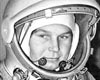 Moscow (RIA Novosti) Jun 17, 2008
On June 16, 1963, Valentina Tereshkova became the first woman to travel to space. She spent two and a half days in orbit. |
|
|

| The content herein, unless otherwise known to be public domain, are Copyright 1995-2007 - SpaceDaily.AFP and UPI Wire Stories are copyright Agence France-Presse and United Press International. ESA Portal Reports are copyright European Space Agency. All NASA sourced material is public domain. Additional copyrights may apply in whole or part to other bona fide parties. Advertising does not imply endorsement,agreement or approval of any opinions, statements or information provided by SpaceDaily on any Web page published or hosted by SpaceDaily. Privacy Statement |
 del.icio.us
 Digg
Digg Reddit
 YahooMyWeb
 Google
 Facebook